


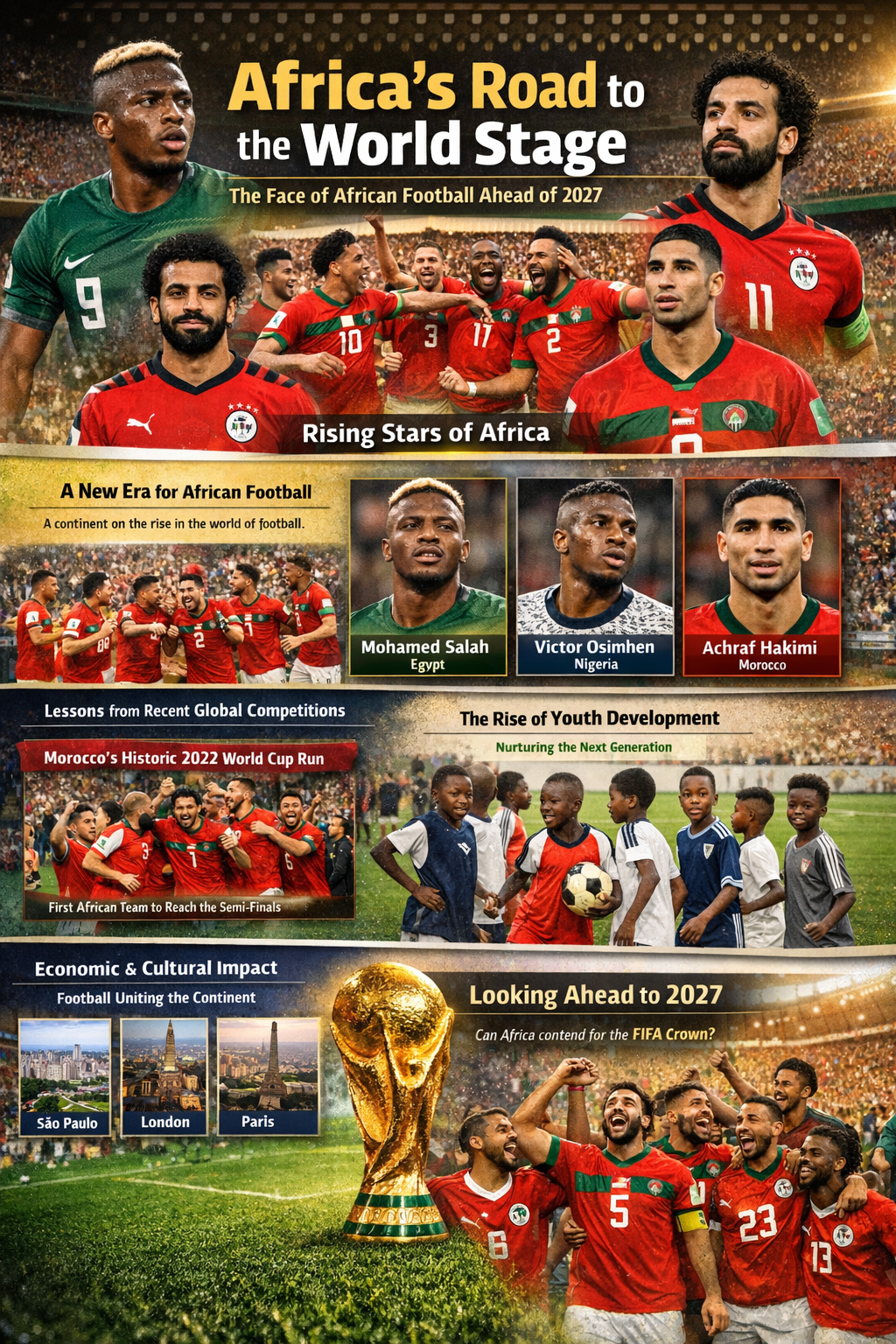
As the global football landscape evolves, Africa is steadily shaping a new and confident identity on the world stage. With growing investment in youth development, stronger domestic leagues, and rising global stars, the continent is positioning itself as a powerful force ahead of the next major tournaments leading into 2027.
A New Era for African Football
Over the last decade, African football has undergone a significant transformation. Organizations such as Confederation of African Football (CAF) have increased efforts to strengthen local competitions, youth academies, and infrastructure. These initiatives aim to ensure that African nations not only participate in global competitions but also compete at the highest level.
African players are now central figures in the world’s top leagues. Stars like Mohamed Salah of Egypt, Victor Osimhen of Nigeria, and Achraf Hakimi of Morocco represent the new generation of African excellence, proving that the continent produces some of the most dynamic talent in world football.
Lessons from Recent Global Competitions
Africa’s recent performances at the FIFA World Cup have changed global perceptions. During the 2022 FIFA World Cup, Morocco national football team made history by becoming the first African team to reach the semi-finals of the tournament. Their remarkable journey inspired millions across Africa and demonstrated that African teams can compete with the world’s elite.
This milestone created renewed confidence within African federations and fans alike. Many football analysts now believe that the next major breakthrough for the continent could come within the next decade.
The Rise of Youth Development
Across Africa, academies and youth programs are flourishing. Countries such as Senegal, Nigeria, Morocco, and Ghana are investing heavily in grassroots football. The goal is simple: produce technically skilled players who can compete internationally while strengthening local leagues.
The success of youth teams in international tournaments has already begun to show the results of these investments. African nations are consistently producing players who quickly transition from local academies to top European clubs.
Economic and Cultural Impact
Football is not only a sport in Africa—it is a powerful economic and cultural engine. Major tournaments organized by FIFA and CAF generate significant opportunities in tourism, media, and infrastructure development.
Additionally, football continues to unite diverse communities across the continent and the African diaspora worldwide. In cities like São Paulo, London, and Paris, African football fans organize viewing events, tournaments, and cultural celebrations that strengthen global connections to the continent.
Looking Ahead to 2027
As Africa prepares for the next chapter in global football competitions, expectations are high. Improved governance, better player development, and growing global respect for African teams suggest that the continent’s influence will only continue to rise.
By 2027, many analysts predict that African teams will not simply participate in world tournaments—they will contend for titles.
The future of African football is bold, youthful, and determined. The world is watching, and Africa is ready to take its place at the center of the global game.


Leave feedback about this