


Why Nigerian and other African food products are being refused entry, and the legal route African stores must use to keep their shelves supplied
By I.E. Aroh
Afribraz Global Business Magazine- September 2026
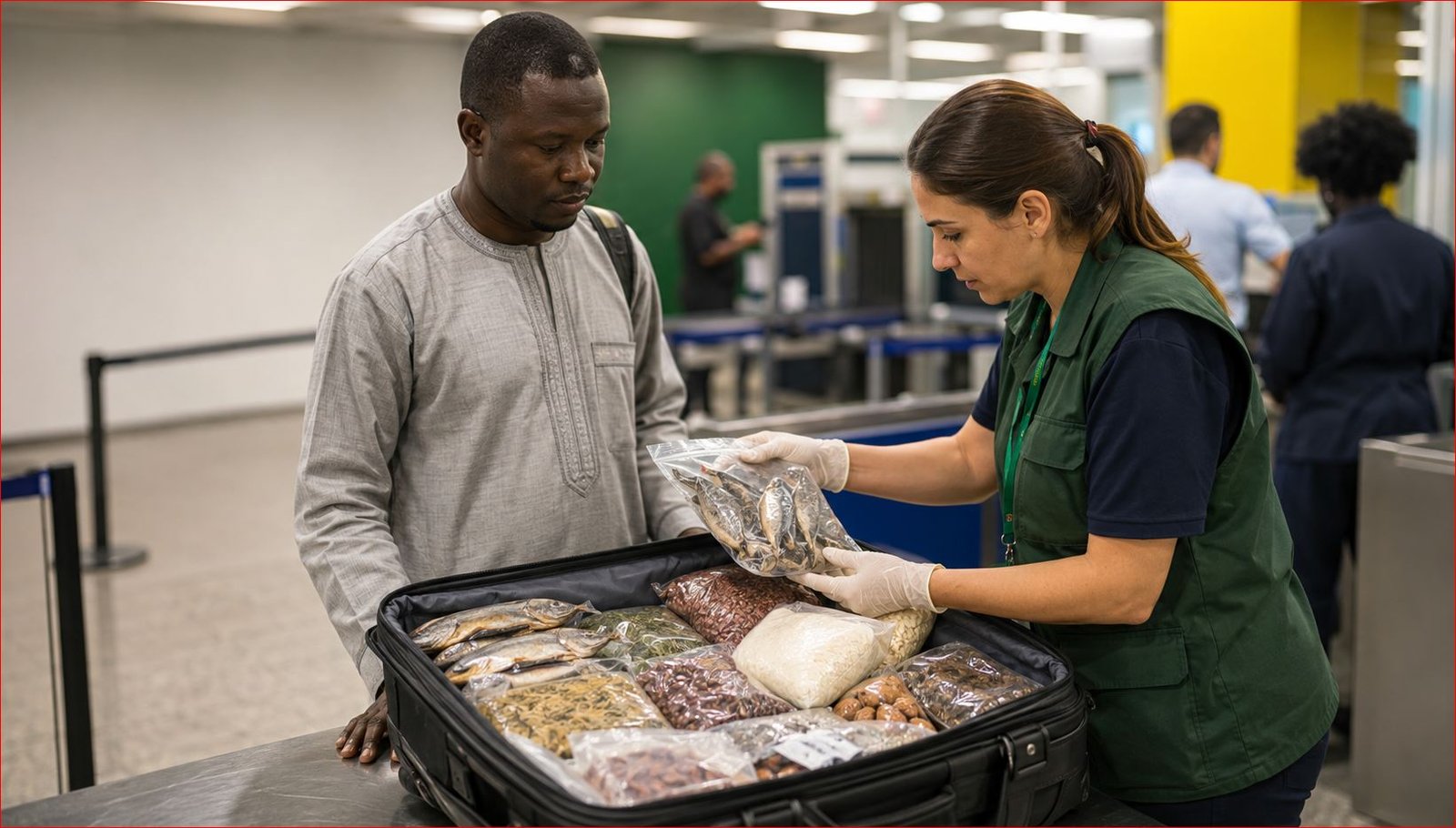
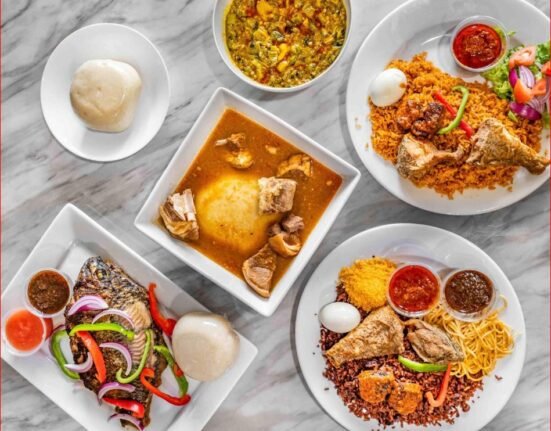
African food stuff shops in Brazil are facing a serious supply problem amid high demand. Store owners and travelers arriving from Nigeria and other African countries increasingly report that food products are being seized or denied entry at Brazilian airports.
Bags containing dried fish, crayfish, meat, seeds, vegetables, traditional spices, palm products, and homemade foods may be inspected and, in some cases, confiscated and destroyed. However, the problem is often misunderstood. There is no general rule prohibiting all Nigerian or African foods in Brazil.
The key issues to address are:
- What exactly is the product?
- Is it of animal or plant origin?
- Is it homemade or industrially processed?
- Is it properly packaged and labeled?
- Is it intended for personal consumption or resale?
- Was it declared upon arrival?
- Does its country of origin meet Brazil’s sanitary requirements?
Most importantly, food brought in passengers’ suitcases cannot be used as an informal commercial supply system for African stores.
Brazil’s Federal Revenue Service, Receita Federal, states that goods carried by travelers must be compatible with personal use or consumption. Commercial or industrial use is prohibited under the baggage regime. Therefore, even food that may be allowed in small quantities for personal consumption can be retained if its quantity, variety, or packaging suggests it is intended for resale.
This distinction explains many of the seizures affecting African businesses.
Also Read :
-
From Fufu to Jollof: São Paulo’s Growing African Food Scene
-
The Food Crisis On Our Menu
-
São Paulo After Dark: 10 Places to Warm Up This Chilly Friday Night
- Advanced Packaging Solutions Driving the Future of Food Processing-FISPAL 2026
Here are goods that should not be carried into Brazil as ordinary passenger baggage
-
Food intended for sale in African stores
The first and most important prohibition is not based on whether the food is African. It is based on its commercial purpose.
A traveler cannot use personal baggage to bring food for distribution or resale in a store, restaurant, or online business. Repeated packages, wholesale quantities, or multiple units of the same product may lead Receita Federal to conclude that the goods are destined for commercial use.
Paying excess-baggage fees or declaring the monetary value does not automatically transform passenger baggage into a legal commercial importation.
Products intended for sale must follow Brazil’s formal import procedure.
This applies even to packaged products such as:
- Garri and cassava flour;
- Yam flour;
- Plantain flour;
- Beans and grains;
- Egusi and ogbono;
- Ground pepper and spices;
- Packaged snacks;
- Palm oil;
- Seasoning cubes;
- Dried vegetables;
- Bottled sauces and drinks.
Some of these products may be legally importable, but goods intended for sale cannot simply enter through travelers’ suitcases.
-
Homemade meat and animal-origin foods
Homemade foods containing meat or other animal ingredients are at high risk of refusal.
This category includes:
- Fresh, cooked, smoked, or dried homemade meat;
- Homemade sausages and meat pies;
- Soups and stews containing meat;
- Frozen meals;
- Vacuum-packed meat prepared at home;
- Homemade food containing pork;
- Unlabeled meat powder or meat seasoning;
- Bushmeat and products made from wild animals.
Cooking, smoking, drying, freezing, or vacuum-packing a product at home does not automatically make it admissible. Without an identifiable industrial producer, original sealed packaging, full composition, and sanitary traceability, inspectors cannot confirm how the animal was raised, slaughtered, processed, or stored.
These controls are primarily the responsibility of the Ministry of Agriculture and Livestock (MAPA), through the International Agricultural Surveillance System, known as Vigiagro.
The purpose is to prevent the introduction of animal diseases, including African swine fever, avian influenza, and other pathogens that threaten Brazilian livestock, food production, and the wider economy.
Industrialized meat and fish products may be permitted in limited personal-consumption situations if they meet MAPA’s conditions. This is not the same as permission to import them for sale.
-
Pork and products containing pork that do not meet Brazil’s treatment requirements
Pork products receive particularly strict scrutiny due to the international risk of African swine fever.
Homemade pork, sausages, dried pork, smoked pork, and foods containing pork may be refused. Under MAPA’s traveler rules, only certain heat-sterilized industrial products may qualify for entry in baggage, subject to all applicable conditions.
Even industrially packaged foods can be rejected if pork appears among the ingredients and the required processing method cannot be confirmed.
-
Fresh meat, raw animal products, and inadequately processed seafood
Travelers should not attempt to enter Brazil with fresh or raw meat, animal organs, or other unprocessed animal products without the required authorization.
Dried fish, stockfish, smoked fish, and crayfish require special caution. Some processed fish products may be admitted for personal consumption if properly processed, sealed, identifiable, and declared. However, loose dried fish, homemade smoked fish, unmarked crayfish, or products transported in ordinary plastic bags may be retained because their origin, species, processing method, and sanitary condition cannot be verified.
Drying a product does not necessarily make it risk-free or legally admissible.
-
Honey and other bee products
Under the MAPA baggage list in effect in 2026, honey and other apicultural products are prohibited from entering as travelers’ baggage. This includes:
- Honey;
- Propolis and its derivatives;
- Royal jelly;
- Beeswax;
- Bee pollen;
- Bee venom.
MAPA explains that animal-origin goods can introduce exotic disease agents and pose risks to animal health, agriculture, food security, and the economy. Prohibited bee products found in baggage may be seized and sent to the destination determined by the agricultural authority.
-
Raw-milk dairy products and homemade dairy foods
Milk, cheese, and other dairy products may carry microorganisms that can affect animal and human health.
Brazil permits certain industrialized dairy products for personal consumption when all official conditions are met. They must normally be in their original, intact packaging and carry labels identifying the product and its composition.
However, milk and dairy products made from raw bovine or buffalo milk are excluded from this general permission. Homemade cheese, unlabelled milk products, and dairy foods without traceable processing information should not be carried.
-
Homemade cakes, meat pies, and snacks containing animal ingredients
A product may appear harmless yet still fall under agricultural control if it contains milk, eggs, meat, or fish.
MAPA’s 2026 guidance prohibits homemade confectionery containing animal-origin ingredients, even when the product is frozen, refrigerated, or vacuum-packed.
Industrialized products may be admitted for personal consumption if they are sealed, correctly labeled, free from infestation, and meet applicable ingredient restrictions. Homemade meat pies, cakes, egg products, and similar foods lack the traceability inspectors demand.
- Fresh fruits, vegetables, roots, leaves, and plant material without authorization
Fresh agricultural products can carry insects, fungi, bacteria, viruses, weed seeds, and other organisms not present in Brazil.
High-risk products include:
- Fresh fruits and vegetables;
- Fresh yam and cassava;
- Fresh cocoyam;
- Fresh okra and peppers;
- Fresh or insufficiently processed leaves;
- Plant cuttings, seedlings, and bulbs;
- Roots carrying soil;
- Kola nuts;
- Unprocessed herbs;
- Flowers and other plant parts.
Whether a particular plant product can enter depends on its botanical identity, form, intended use, and country of origin. Some require a phytosanitary certificate issued by the exporting country, prior authorization, or an import permit. Others may not have an approved pathway from the country concerned.
The fact that a crop already grows in Brazil does not mean every foreign consignment can enter.
-
Seeds, grains, and beans that could germinate
Egusi, ogbono, beans, maize, melon seeds, and other grains are particularly sensitive when whole, raw, and capable of germination.
These products may be treated as plant-propagation material rather than as food. Inspectors must consider whether they could introduce agricultural pests or unapproved plant varieties.
Commercially processed, roasted, milled, or otherwise rendered non-viable products may be subject to a different risk classification, but their admissibility must still be verified before shipment. Store owners should never assume that a sealed bag of seeds is automatically allowed.
- Unlabeled powders, dried leaves, and unidentified mixtures
Many traditional African products arrive in transparent bags without a manufacturer’s label. Examples include:
- Ground egusi;
- Ogbono powder;
- Dried bitterleaf or oha leaves;
- Pepper mixtures;
- Soup thickeners;
- Herbal powders;
- Cassava preparations;
- Crayfish powder;
- Unidentified seasoning blends.
Inspectors cannot authorize a product they cannot reliably identify. The absence of a commercial name, botanical or common identity, ingredients, producer, batch number, manufacturing date, expiration date, country of origin, and storage instructions creates a major compliance problem.
Herbal mixtures making medicinal claims may also fall under ANVISA rules for medicines, traditional products, or supplements rather than ordinary food rules.
-
Products containing unauthorized ingredients or substances
Brazil does not automatically accept a food simply because it is legally sold in Nigeria, Ghana, Angola, Cameroon, or another country.
Ingredients, additives, colors, sweeteners, preservatives, and processing aids must comply with Brazilian legislation. Certain “traditional” or “natural” ingredients may not yet be authorized for use as food in Brazil. A product containing a novel ingredient may require a safety evaluation.
Foods containing prohibited substances, undeclared ingredients, or components that exceed Brazil’s contaminant and residue limits can be refused by ANVISA.
Receita Federal also lists products containing genetically modified organisms among goods prohibited in traveler baggage.
Why are the products seized?
The authorities are not supposed to seize products merely because they come from Nigeria or Africa. Seizures typically result from one or more regulatory issues.
Agricultural and environmental protection
MAPA and Vigiagro prevent foreign pests and animal diseases from entering Brazil. A single contaminated fruit, seed, piece of meat, or plant cutting can introduce an organism capable of causing significant damage to Brazilian farms and natural ecosystems.
Protection of public health
ANVISA examines sanitary safety, ingredients, additives, contaminants, packaging, labeling, and the legal regularization of food products.
Imported food must generally comply with the same Brazilian sanitary standards applied to food manufactured locally.
Lack of traceability
Loose, homemade, or unmarked goods make it impossible to determine their producer, ingredients, batch, expiration date, manufacturing conditions, or response procedure in the event of contamination.
Undeclared agricultural goods
Agricultural products subject to inspection must be declared. MAPA advises travelers who are uncertain about a product’s classification to declare it and report to Vigiagro through the “Goods to Declare” channel.
Failure to meet the requirements may result in seizure and destruction under MAPA Ordinance No. 872, dated 12 December 2025 and published on 5 January 2026.
Evidence of commercial purpose
A suitcase carrying many identical packages for a shop is no longer an ordinary personal food case. Receita Federal may treat it as an attempted commercial import outside the correct customs regime.
This is why declaring a suitcase does not necessarily guarantee release. Declaration allows inspection and avoids concealment, but it does not legalize a prohibited product or an irregular commercial shipment.
It is not only ANVISA: understanding the authorities
African businesses should know which agency controls which part of the process.
MAPA/Vigiagro controls animals, meat, fish, dairy products, honey, plants, seeds, grains, fruits, vegetables, and other agricultural goods. It evaluates risks to animal and plant health and to agricultural quality.
ANVISA regulates food safety, ingredients, additives, certain processed foods, dietary supplements, novel foods, packaging, and sanitary regularization.
Receita Federal controls customs declarations, taxation, baggage rules, quantities, values, and suspected commercial activity.
Ibama may become involved when products contain protected wildlife or materials subject to environmental controls.
Siscomex is the federal platform through which commercial import declarations, licenses, and approvals are processed. The exact administrative treatment depends on the product’s NCM tariff classification.
The alternative: build a legal African food-import channel
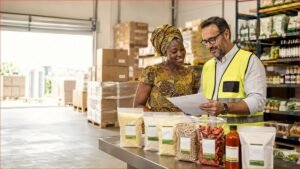
The sustainable solution is not to find different passengers willing to carry more bags. African stores in Brazil need to move from suitcase supply to structured commercial importation.
Select a small number of commercially viable products
The importer should begin with perhaps five to ten high-demand products rather than attempt to launch a large catalog immediately.
Lower-risk, shelf-stable foods are usually better starting points, such as professionally milled flours, heat-treated grains, canned products, industrial sauces, packaged snacks, and properly processed spices.
Animal-origin products and viable seeds are generally more complicated.
Classify every product correctly
Each product must have an appropriate NCM-Mercosur Common Nomenclature code. The NCM determines customs taxes, required documentation, and whether ANVISA, MAPA, or another authority must approve the importation.
Classification should be based on the product’s complete composition and processing method—not only its commercial name.
For example, “Egusi” may require analysis of the botanical species, whether it is whole or ground, whether it can germinate, its intended use, and the processing applied.
Verify admissibility before buying or shipping
Before paying a supplier, the Brazilian importer should consult the Siscomex Administrative Treatment Simulator and confirm:
- Whether import licensing is required;
- Whether MAPA or ANVISA must approve the shipment;
- Whether a phytosanitary or health certificate is required;
- Whether importation is permitted from the specific African country;
- Whether the foreign establishment must be officially approved;
- Whether laboratory reports or certificates of analysis are required.
Requirements can change due to disease outbreaks and pest alerts. A product permitted from one country may be restricted in another.
Use a properly established Brazilian importer
The importing company typically needs a Brazilian CNPJ, customs authorization to operate in Siscomex, and a valid sanitary license covering the relevant food activities.ANVISA states that it does not issue an AFE solely for ordinary food imports. Instead, the importer must generally hold a valid sanitary license issued by the competent municipal, state, or Federal District health authority.
If an African store is not structured to import directly, it may contract with a licensed trading or specialist food-import company. ANVISA expressly recognizes outsourcing as an alternative when a company lacks the appropriate license or storage infrastructure. The responsible buyer or commissioning company must still satisfy the applicable product-regularization requirements.
Regularize the product
Since September 1, 2024, ANVISA’s food-regularization framework has provided three principal routes:
- Registration with ANVISA;
- Notification to ANVISA;
- Notification to the local health-surveillance authority of the start of manufacturing or importation.
Some categories are exempt from prior product regularization, but this exemption does not relieve them of safety, composition, labeling, inspection, or import requirements.
Prepare labels for the Brazilian market
Imported food offered for sale must comply with Brazilian labeling requirements. Depending on the product, the label may need to include:
- Product name;
- Ingredients;
- Allergen declarations;
- Gluten declaration;
- Net quantity;
- Country of origin;
- Manufacturer and Brazilian importer;
- Batch number;
- Manufacturing and expiration dates;
- Storage instructions;
- Nutritional information;
- Required warnings in Portuguese.
ANVISA permits certain labeling corrections under customs control before commercialization in specific circumstances, but importers should not rely on corrective stickers as a substitute for proper preparation.
Professionalize African suppliers
A Nigerian or African producer seeking to enter the Brazilian market should provide:
- A legally registered manufacturing facility;
- Standardized recipes and ingredients;
- Original, sealed packaging;
- Batch traceability;
- Production and expiration dates;
- Laboratory analysis;
- Food-safety documentation;
- Certificates required by Brazilian authorities;
- Export-ready labels and technical specifications;
- Consistent shelf life and storage conditions.
For animal-origin products, approval may involve government-to-government sanitary arrangements and the eligibility of the exporting establishment. A small, informal processor cannot typically resolve this by simply printing a label.
Consider production in Brazil
For products that are too difficult or costly to import, local production may be the best alternative.
African entrepreneurs can source Brazilian cassava, beans, vegetables, fish, meat, and palm products and manufacture African-style foods in a licensed Brazilian facility. Traditional recipes can be produced through:
- Contract manufacturing;
- Shared licensed kitchens;
- Private-label agreements;
- Partnerships with Brazilian food processors;
- Cultivation of permitted African crops in Brazil;
- Local drying, milling, packaging, and distribution.
Local production reduces freight costs, airport losses, and customs uncertainty. It can also generate employment and create a new Brazilian-African food industry.
However, seeds or planting material brought from Africa must still comply with MAPA’s phytosanitary import procedures. They must never be smuggled in passenger baggage.
A practical cooperative model for African stores
Most individual African shops lack the volume or technical capacity to import on their own. A cooperative purchasing model could solve this problem.
Several stores could establish or appoint a specialized importer to:
- Consolidate demand;
- Select legally admissible products;
- Negotiate with certified African manufacturers;
- Register or communicate products where necessary;
- Prepare Portuguese labels;
- Arrange freight and customs clearance;
- Store the goods in a licensed warehouse;
- Distribute them legally to participating shops.
This would transform fragmented, high-risk suitcase imports into a predictable wholesale supply.
A pilot shipment should begin with lower-risk products. Once procedures and costs are proven, the range can gradually expand.
What should travelers do?
Travelers carrying food for genuine personal consumption should take four basic precautions:
- Consult MAPA’s current product-by-product baggage list before traveling.
- Carry only permitted quantities for personal use.
- Keep eligible products in their original, sealed, and fully labeled packaging.
- Declare agricultural goods through the e-DBV and report to Vigiagro via the “Goods to Declare” channel.
MAPA’s online list was introduced under the new baggage framework in January 2026 and is updated based on sanitary conditions. Travelers should check the live list before every journey rather than rely on what passed through the airport on a previous trip.
From confiscation to opportunity
The complaints from African stores are legitimate. Demand for authentic African food is growing in São Paulo and other Brazilian cities, yet the supply chain remains informal, expensive, and vulnerable.
But the answer is not confrontation with airport inspectors or a search for ways around the rules. The real answer is organization; this is what you should do instead. African businesses must separate personal baggage from commercial imports, identify products that Brazil can legally admit, work with compliant producers, use qualified importers, and consider local manufacturing where direct importation is not viable. Brazil’s rules are demanding, but they do not automatically reject African food. With proper classification, documentation, processing, packaging, and commercial planning, many products can legally reach Brazilian consumers. What is currently treated as an airport-seizure problem could become a serious business opportunity: the creation of a professional, transparent, and sustainable African food supply chain in Brazil.
Editorial note: Import requirements vary by product, processing method, country of origin, and sanitary conditions in force on the shipment date. Businesses should obtain a product-specific assessment from a customs broker, a food regulatory specialist, and the competent Brazilian authorities before purchasing or dispatching goods.
Sources: Official MAPA list of prohibited and permitted agricultural goods; ANVISA’s food-regularization framework; ANVISA’s food-import procedures. Siscomex guidance on import controls; MAPA’s current traveler and baggage guidance; Receita Federal’s list of prohibitions and restrictions; MAPA’s confectionery guidance


Leave feedback about this