



Health & Wellness
Afribraz Global Business Magazine | Editorial Desk
As a result, stomach discomfort has become a routine part of daily life for millions of people: burning after meals, bloating, excessive gas, nausea, early fullness, belching, abdominal discomfort, or the sensation that food is simply “not digesting.”
But these symptoms should not be automatically blamed on a particular food or assumed to be ordinary gastritis.
Dr. Soliman Clinics and Labs, which provides medical consultations, laboratory testing, and gastroenterology-related health information in Cameroon, believes digestive complaints need to be addressed. The clinic operates in Douala and Buea and offers health education content through its website, video channels, and the Your Health Today with Dr. Soliman program.
At the same time, international medical guidance makes an important distinction: food can worsen digestive symptoms without necessarily causing gastritis. The U.S. National Institute of Diabetes and Digestive and Kidney Diseases (NIDDK) notes that diet does not play a major role in most cases of gastritis or gastropathy. Common causes include Helicobacter pylori infection, prolonged use of certain anti-inflammatory medicines, alcohol, bile reflux, and autoimmune conditions.
Understanding Gastritis
Gastritis is inflammation of the stomach lining; gastropathy is damage to the stomach lining with little or no inflammation.
Symptoms may include upper abdominal pain or discomfort, nausea, vomiting, loss of appetite, feeling full too quickly, or feeling uncomfortably full after eating. Gastritis is also associated with ulcers and gastrointestinal bleeding, and ulcers can persist.
H. pylori is the most prevalent bacterium that can infect the stomach. Long periods of exposure to non-steroidal anti-inflammatory drugs (NSAIDs) such as ibuprofen and aspirin are also a major cause, but if not properly applied and monitored, the effects of this type of exposure can adversely affect the stomach contents of the body.
This is why just changing your diet isn’t enough. If gastritis is caused by H. pylori, for example, medical treatment is necessary to eradicate the infection. The treatment usually consists of antibiotics and acid-suppressing medication prescribed by a healthcare provider.
Foods That May Trigger or Worsen Digestive Problems
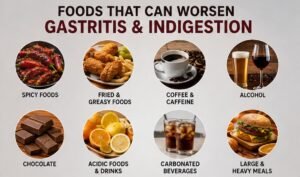
There is no single list of foods that every person with gastritis must permanently eliminate. Individual tolerance varies greatly.
Yet people with indigestion, reflux, and stomach irritation are often more likely to report worsening symptoms after consuming:
Very spicy foods, Fried and greasy foods, High-fat meals, Alcohol, Coffee and other caffeinated drinks, Carbonated beverages, Chocolate, highly acidic foods or drinks, Large meals, some processed foods.
NIDDK reports that people with functional dyspepsia may experience worsening symptoms after fatty or greasy foods, caffeinated drinks, carbonated beverages, some fruits and fruit juices, and certain wheat or grain products.
For people with gastroesophageal reflux disease (GERD), common triggers include acidic foods such as citrus and tomatoes, alcohol, chocolate, coffee, high-fat foods, mint, and spicy foods.
Individual. A food that causes severe discomfort for one person can be perfectly acceptable for another.
“Food That Does Not Digest”: What Does That Really Mean?
When people say, “My food is not digesting,” they may be describing several different experiences.
They may feel unusually full after eating, experience bloating, burping, nausea, reflux, abdominal discomfort, or a sensation that food is lingering in the stomach.
These symptoms are often associated with dyspepsia, also known as indigestion. Dyspepsia can involve upper-abdominal pain, early satiety, post-meal fullness, nausea, and bloating.
Indeed, this sensation does not necessarily mean the stomach has stopped digesting food.
Persistent symptoms can have different causes, including reflux, functional dyspepsia, gastritis, peptic ulcer disease, medication effects, or other gastrointestinal problems. That is why recurrent symptoms need to be properly evaluated and treated rather than repeatedly self-treated.
Managing Gastritis: Practical Steps 
For those who already have gastritis or recurrent indigestion, a number of lifestyle changes may help minimize symptoms.
- Identify your personal triggers
Keep a simple food-and-symptom diary. Record what you eat, how much, and what symptoms occur afterward.
This makes it easier to spot patterns.
- Avoid foods that consistently worsen your symptoms
Do not eliminate entire food categories permanently. If certain foods repeatedly trigger symptoms, talk to the doctor or dietitian about continuing to avoid them.
- Be careful with alcohol
Alcohol can irritate the stomach lining and is a well-known factor in gastropathy. Avoiding alcohol may be especially important during periods of active stomach irritation.
- Review painkillers with a healthcare professional
NSAIDs such as ibuprofen, naproxen, and aspirin can cause stomach irritation and gastropathy. Anyone who frequently takes these drugs should talk to a doctor and not simply continue taking them indefinitely.
- Avoid very large or heavy meals
Some people with low-fat diets also experience indigestion and reflux that are exacerbated by large, fatty meals. Smaller, balanced meals may be more comfortable for some.
- Do not eat immediately before lying down
For people with reflux, eating at least three hours before lying down or going to bed may help reduce nighttime symptoms.
- Investigate recurring symptoms
If symptoms keep returning, the goal is not to suppress them. The cause should be examined.
Depending on the clinical situation, a doctor may consider tests for H. pylori, blood or stool tests, or upper gastrointestinal endoscopy.
Questions People Ask on Social Media and the Clinical Answers
Social media has sparked an extensive public discussion about gastritis, digestion, and “bad foods.” Below are some common questions asked by the public in a Soliman Clinics-style health education format. These questions are editorially reconstructed from common public concerns and are not presented as verbatim comments from the clinic’s social media accounts.
Q: “Doctor, I have gastritis. Must I stop eating everything I like?”
Answer: No. There is no single diet that works for everyone with gastritis. The key is to identify the foods that consistently worsen your symptoms while maintaining a nutritionally balanced diet. Most cases of gastritis are not caused by eating the “wrong” foods. H. pylori infection and medication-related stomach injury may require specific medical treatment.
Q: “Why does food stay in my stomach for hours?”
Answer: The sensation of food lingering in the stomach can occur with indigestion, excessive fullness, reflux, or other gastrointestinal issues. It does not mean that food is literally sitting undigested.
If the sensation is frequent, severe, or associated with vomiting, weight loss, or significant pain, medical evaluation is recommended.
Q: “Can spicy food cause gastritis?”
Answer: Spicy food can worsen symptoms for some people, particularly burning, reflux, or indigestion. However, that does not mean spicy food is responsible for every case of gastritis.
If gastritis is persistent or recurrent, the underlying cause should be investigated.
Q: “Is coffee bad for people with gastritis?”
Answer: Coffee and caffeine can worsen indigestion or reflux symptoms in some people. If coffee causes burning, pain, or persistent reflux, reducing or avoiding it can help.
However, the response varies from person to person.
Q: “Can milk cure gastritis?”
Answer: Milk should not be considered a treatment for gastritis. While some people may feel relief after eating certain foods or drinks, that does not address the underlying cause.
If gastritis is caused by H. pylori, for example, appropriate medical treatment is necessary.
Q: “Can I take painkillers when I have stomach problems?”
Answer: Be cautious. Some NSAID painkillers can irritate the stomach lining and lead to gastropathy. If you regularly need pain medication and have stomach symptoms, discuss safer options with your healthcare professional rather than self-medicating.
Q: “Why do I feel bloated after almost every meal?”
Answer: Bloating can have many causes. Instead of eliminating dozens of foods from your diet without guidance, document what you eat and when symptoms occur, then discuss persistent symptoms with a doctor or a dietitian.
Q: “Can stress cause stomach problems?”
Answer: Stress can contribute to or worsen digestive symptoms in some people, including indigestion. However, persistent stomach symptoms should not be automatically attributed to stress.
A proper medical assessment can determine whether an underlying gastrointestinal condition is present.
Q: “Should I stop eating acidic fruits?”
Answer: Not necessarily. Citrus and other acidic foods may worsen reflux symptoms in some people, but there is no universal requirement for everyone with gastritis to eliminate them.
Your symptoms and medical diagnosis should guide your dietary changes.
Q: “When should stomach problems become a serious concern?”
Answer: Seek medical attention when symptoms are severe, persistent, or accompanied by warning signs.
These include vomiting blood, vomit that looks like coffee grounds, black or tarry stools, unexplained weight loss, difficulty swallowing, repeated vomiting, severe pain, and significant weakness or lightheadedness. Gastrointestinal bleeding requires urgent medical attention.
The Soliman Clinics perspective: Listen to Your Digestive System
The health message from the discussion is straightforward: Don’t treat every stomach problem as a food problem.
Food can trigger symptoms. Eating habits can influence digestion. Some foods can significantly worsen reflux and indigestion. However, recurrent gastritis or persistent digestive symptoms can have medical causes that require diagnosis and targeted treatment.
Dr. Soliman Clinics and Labs is a healthcare institution focused on medical consultation, laboratory testing, and health education, operating in Douala and Buea, Cameroon. It also offers educational content on gastroenterology, including information on hepatitis and other digestive conditions.
The best way to treat patients is to ask not merely “What food is bad for our stomach?” but “Which food is not good for our stomach?”
The better questions are:
What is causing my symptoms?
Which foods trigger my symptoms?
Do I need testing?
Could medication, an infection, or another gastrointestinal condition be involved?
And most importantly:
Am I treating the cause of the problem, or am I hiding the symptoms?
A Final Health Reminder
In other words, this article is for educational purposes and does not replace an individual medical consultation. Gastritis, indigestion, reflux, ulcers, and other gastrointestinal conditions share symptoms but require different treatment. Anyone with persistent, severe, or worsening symptoms should seek professional medical assessment.
Afribraz Global Business Magazine continues to stress health, wellness, and medical education as integral to the development of a healthy African and global business community.







Leave feedback about this