


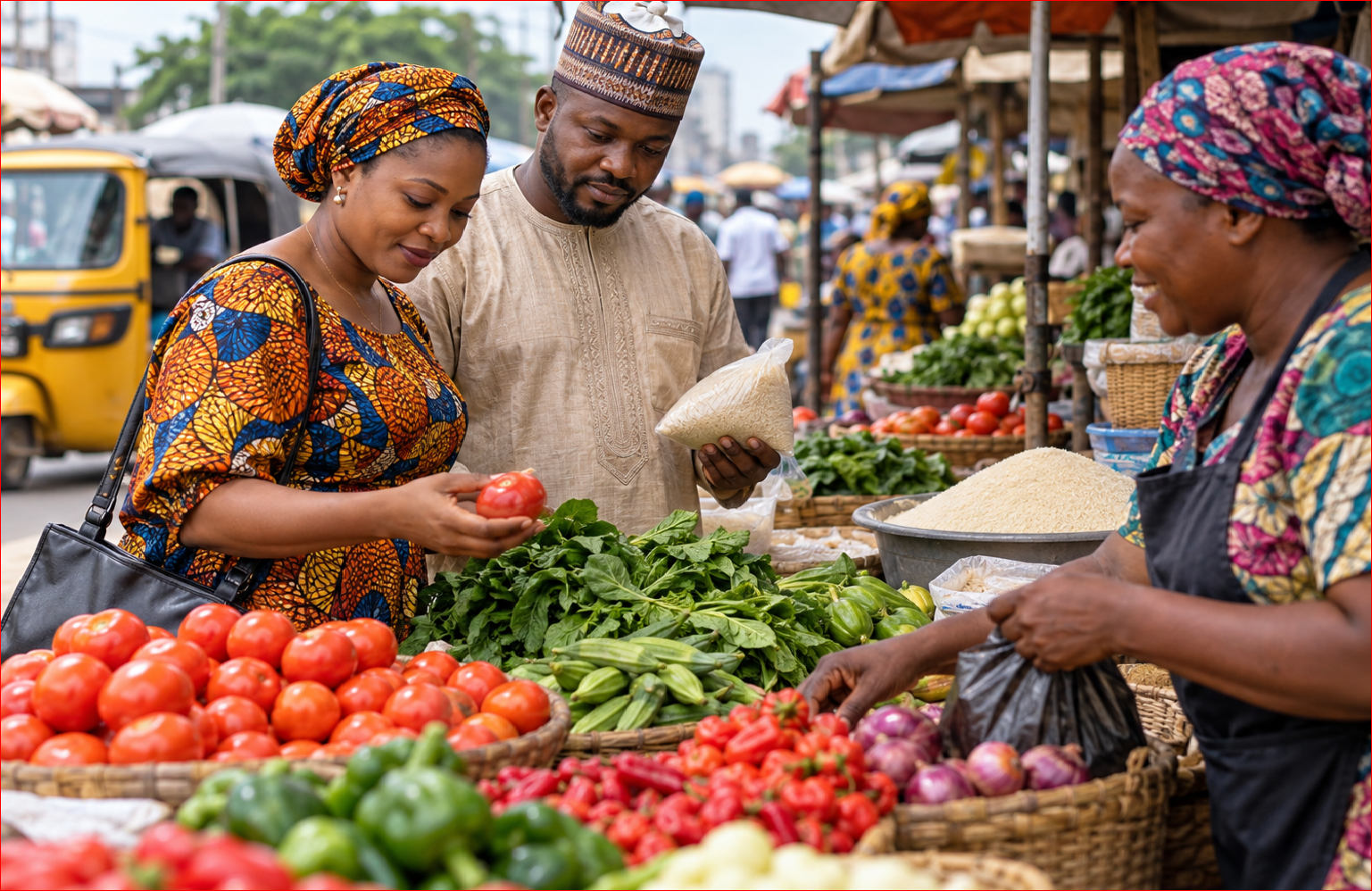
From fuel subsidy removal to graduates seeking meaningful work, Nigeria’s independence anniversary calls for an assessment of progress through the lives of its people.
EXCLUSIVE | AFRIBRAZ GLOBAL BUSINESS MAGAZINE
Governance, Economy & Development
By I. E. Aroh — Afribraz Global Business Magazine
1 October 2026
For an ordinary Nigerian, independence is measured by the gap between earnings and expenses.
It is measured by the cost of commuting to work, the food left on the family table, the electricity available to run a small business, and the likelihood of finding employment after graduation. It is measured by whether a hospital can provide treatment and whether a farmer can cultivate land safely.
On 1 October 2026, Nigeria marks 66 years of independence, having gained sovereignty on 1 October 1960. The anniversary deserves celebration. It also demands an honest question: how much of the country’s progress can an ordinary Nigerian actually feel?
Nigeria has produced exceptional talent, expanded its commercial and cultural influence, and created opportunities that previous generations could scarcely imagine. Yet a nation’s achievements must also be assessed by the security available to people with modest incomes and little political influence.
For Afribraz Global Business Magazine, the central issue at 66 is whether Nigeria’s considerable capabilities are making everyday life more affordable, productive, and dignified.
Progress exists, but its benefits remain uneven.
Nigeria’s journey cannot be fairly reduced to failure.
Its entrepreneurs, professionals, artists, and athletes have demonstrated remarkable ability. Its return to civilian government in May 1999 was a significant political milestone after years of military rule.
However, individual achievement and institutional performance must be examined separately.
A business owner who succeeds while paying heavily for alternative electricity demonstrates enterprise. That success also raises a question about the infrastructure available to other businesses with fewer resources.
A graduate who builds a career abroad demonstrates Nigerian talent. The country must still ask whether comparable opportunities exist at home.
The ordinary citizen needs a system in which hard work has a reasonable chance of producing stability. Exceptional resilience should not be a basic requirement for earning a living.
Subsidy removal: the reform Nigerians feel in their pockets
Few recent policies have affected everyday life as directly as the petrol subsidy reform initiated in May 2023.
The economic case for reform was substantial. According to the World Bank, the petrol subsidy cost Nigeria more than ₦8.6 trillion between 2019 and 2022, disproportionately benefited better-off consumers, and encouraged smuggling. Its June 2024 assessment described the government’s price adjustments as the beginning of a phase-out of the subsidy.
But the consequences of higher petrol prices extend well beyond car owners.
When fuel becomes more expensive, the cost of moving workers and goods can rise. Traders face higher delivery costs. Businesses that rely on petrol generators incur additional operating costs. They can pass those costs on to households.
For a low-income worker, a higher transport fare leaves less for food. For a small shop owner, increased operating expenses can erase an already narrow profit margin. For a job seeker, traveling to an interview becomes another financial hurdle.
These are the channels through which a fiscal reform reaches ordinary Nigerians.
The case for protecting households was recognized from the outset. In June 2023, the World Bank called for substantial cash transfers to support poor, near-poor, and low-income households affected by higher petrol prices.
The public therefore deserves a clear account of the reform’s results: how much has been saved, where those resources have gone, and which improvements citizens can verify.
More affordable transport, functioning clinics, better schools, and dependable electricity would make that account tangible.
Subsidy reform should be judged by both its contribution to public finances and the effectiveness of the protection and services accompanying it. Household hardship also reflects other pressures, including exchange-rate movements, food supply constraints, and insecurity, so petrol subsidy removal should not be treated as the sole explanation for rising living costs.
A stronger economy must mean a stronger household
Nigeria’s recent economic assessments reveal the gap between national indicators and family finances.
The World Bank’s October 2025 Nigeria Development Update noted improvements in economic stabilization, revenue mobilization, and external balances, but warned that these gains had not yet significantly improved living standards. Its April 2026 update again stressed that high poverty and inflation were limiting the benefits people could feel.
For an ordinary Nigerian, the distinction is straightforward.
A salary increase provides little relief if rent, transportation, and food costs rise faster. Lower inflation means prices generally rise more slowly; it does not necessarily mean the market basket has become cheaper.
The anniversary assessment must therefore look beyond economic growth to real purchasing power.
Can a household meet essential expenses without repeatedly borrowing? Can parents keep children in school? Can a worker save anything after payday? Can a pensioner afford necessary medicines?
These questions reveal whether economic improvement has reached the people expected to sustain it.
Graduates need a clear pathway from education to productive work
For families who sacrifice to finance education, graduation should open a credible path toward independence.
A degree cannot guarantee a specific job. Nevertheless, an economy should provide enough opportunities for educated young people to develop skills, gain experience, and earn a reasonable living.
Nigeria’s employment discussion needs to examine the quality of work as carefully as the number of people classified as employed.
The National Bureau of Statistics reported 4.4% unemployment, 9.2% time-related underemployment, and 93% informal employment in the second quarter of 2024. These are dated national benchmarks, not October 2026 figures or a specific measure of graduate joblessness.
They illustrate why a headline unemployment rate cannot answer every question about opportunity. Someone may be working while earning too little, working fewer hours than desired, or holding a role with little connection to their training. Informal employment can include productive enterprise, but it does not automatically provide stable earnings or job protection.
For graduates, the practical questions are sharper:
Where can they obtain their first experience?
Are recruitment processes fair?
Can an entry- level salary cover the cost of commuting to work?
Are employers offering a path to advancement?
Telling every graduate to become an entrepreneur is insufficient. Entrepreneurship requires customers, infrastructure, capital, and a workable business environment.
Some graduates will build companies; others should contribute through paid employment.
A serious response would connect universities and polytechnics with employers, expand paid placements and apprenticeships, strengthen technical training, and improve the conditions in which businesses can hire.
Success should be measured by employment secured, earnings achieved, and careers sustained, not simply by the number of participants in training programs.
The small business owner carries the same burden
Graduate employment and small-business survival are closely connected.
A firm facing unreliable electricity, expensive transport and uncertain demand may struggle to retain staff, let alone recruit new graduates.
A trader whose customers have lost purchasing power cannot expand simply because the country has recorded economic growth.
For ordinary Nigerians, the workplace is often a shop, workshop, farm, market stall or small service business. Improving productivity in these settings would connect development directly to household incomes.
Dependable power, safer transport routes, accessible finance and predictable public administration would help businesses turn effort into growth, and growth into jobs.
How Nigeria compares with countries of similar age since independence
The following comparison uses years since independence rather than the age of a civilization or society.
Cyprus became independent in 1960, Singapore in 1965, Botswana in 1966, and Mauritius in 1968. All were therefore 66 years old or younger at Nigeria’s 2026 anniversary.
Brazil is included as a separate development reference because of its relevance to Afribraz’s Brazil-Africa perspective. It is an older independent country and should not be presented as an age-matched peer.
The 2025 UNDP Human Development Report, using 2023 data, compares health, education, and income through the Human Development Index.
| Country | Independence year | Independence-age comparison | HDI value, 2023 | Global HDI rank | Life expectancy, 2023 |
| Nigeria | 1960 | 66 years | 0.560 | 164 | 54.5 years |
| Cyprus | 1960 | 66 years | 0.913 | 32 | 81.6 years |
| Singapore | 1965 | 61 years | 0.946 | 13 | 83.7 years |
| Botswana | 1966 | 60 years | 0.731 | 111 | 69.2 years |
| Mauritius | 1968 | 58 years | 0.806 | 73 | 74.9 years |
| Brazil | 1822 | Older country; additional reference | 0.786 | 84 | 75.8 years |
Source: UNDP, Human Development Report 2025. All development figures refer to 2023 and do not reflect conditions in October 2026.
These figures require context. Countries differ in population, geography, historical experience, and economic structure. National averages also obscure inequalities within each country.
Even with those limitations, the comparison makes one point clear: an independence anniversary records the passage of time; development records what people can do with their lives.
Singapore and Mauritius: turn plans into opportunity
Singapore offers a concrete example of measurable public delivery. Its Housing & Development Board reported completing approximately 19,600 flats in 2025. The key lesson for Nigeria is the discipline of linking plans to completed services that citizens can use.
Mauritius illustrates the value of economic diversification. Its official country profile describes a transition from a low-income agricultural economy toward industrial, financial, and tourism activities. For Nigeria, diversification should create identifiable employment opportunities across several sectors.
Botswana: resource wealth must create lasting livelihoods
Botswana used diamond-led growth, public investment, and political stability to improve living standards. Yet it still faces unemployment, inequality, and pressures from its dependence on diamonds.
Its experience offers both encouragement and caution: natural resources can help finance development, but broad prosperity requires employment and productive activity beyond the dominant commodity.
Brazil: social protection is part of development
Brazil’s inclusion broadens the discussion to a country with valuable experience linking social assistance to human development.
Its Bolsa Família program combines income support for eligible families with requirements for school attendance and health monitoring. These include vaccination and nutritional monitoring for young children, as well as prenatal care for pregnant women
Nigeria can examine how targeted assistance, reliable beneficiary records, and accessible public services can work together to protect households during economic adjustment.
Such cooperation could give the Brazil–Nigeria relationship a practical development focus: sharing experience in agricultural productivity, technical training, and social protection, with results judged by their usefulness to ordinary people.
What Nigerians should be able to feel at 66
An ordinary Nigerian should perceive national progress through greater control over daily life.
A parent should be able to plan for school expenses.
A graduate should have a credible path to employment.
A trader should retain enough profit to restock.
A farmer should reach the field and market safely.
A patient should receive timely care.
Citizens should also be able to see what public money has delivered.
A funded clinic should have staff and essential supplies.
A completed road should be usable.
A training program should improve employment prospects.
Responsibility rests with federal, state, and local government, alongside employers, educational institutions, and other public bodies.
Clear responsibilities and published results would make it easier to identify progress and demand correction when delivery falls short.
Independence must become a lived promise
At 66, Nigeria has talent, enterprise, and achievements worthy of pride.
The next task is to make opportunity and dignity more widely available.
Ordinary Nigerians should not have to interpret better national accounts while their household finances deteriorate. Graduates should not be left without a realistic bridge between education and work. Families bearing the costs of reform should be able to identify the protection and improvements those reforms help provide.
For Afribraz Global Business Magazine, the strongest independence story would be one Nigerians can confirm from their own lives: food they can afford, work that rewards effort, services that function, and a future they can plan.
At 66, Nigeria’s promise must become increasingly visible in the well-being of its ordinary citizens.

A degree in the drawer, a keke on the road
The struggle is evident in the commercial tricycle business.
A 2023 PUNCH investigation documented graduates and National Diploma holders operating keke in the Federal Capital Territory after struggling to find other employment. One diploma holder, identified as Abdullahi, traveled from Kaduna to Abuja expecting a job opportunity, only to discover the work involved driving a tricycle. A local riders’ association leader confirmed that its membership included university graduates and diploma holders.
Commercial driving is honest, useful work. Some people choose it for independence or better earnings than other work. The concern arises when graduates enter it because they cannot access work that builds on their training or offers the career they sought.
Their willingness to earn a living deserves respect. It should also prompt an examination of how effectively the economy uses educated talent.
The national employment figures reveal why job quality matters. In the second quarter of 2024, the National Bureau of Statistics recorded 93% informal employment and 9.2% time-related underemployment. These figures describe the wider workforce, not graduates alone.
A graduate driving keke may therefore be classified as employed while still searching for a different opportunity. An employment statistic cannot, by itself, tell readers whether that person has stable earnings, financial security, or a realistic path to advancement.
Higher petrol prices add another pressure. A petrol-powered keke operator must meet fuel expenses before calculating what remains for maintenance, vehicle payments, and household needs. Increasing fares may protect income, but passengers facing their own financial difficulties may struggle to pay.
This is where subsidy reform and the graduate-employment problem meet: the graduate finds a means of survival, then faces rising costs within that livelihood.
The emotional cost of waiting
Prolonged job searching can delay financial independence, housing plans, and the ability to support parents or younger siblings. It can also create self-doubt, especially when graduates have followed the familiar instruction to study hard and improve their prospects.
A 2026 Sunday PUNCH report documented the experiences of first-class graduates struggling to secure suitable employment. One interviewee, identified as Gloria, described frustration, exhaustion, and uncertainty while working in a role the newspaper reported paid ₦50,000 monthly. Her experience is an individual account, not a measure of all Nigerian graduates’ circumstances.
Such accounts give the independence debate a human dimension.
For someone sending applications without success, national celebrations may coexist with anxiety about the next meal or transport fare. Pride in Nigeria and disappointment with available opportunities can coexist.
At 66, the country should recognize that a young person asking for a fair chance to work is expressing a legitimate expectation of citizenship.
When leaving feels like the only remaining opportunity
Migration can be a positive, planned decision: a route to education, professional experience, business, or family reunion. But dangerous journeys reveal a different reality, one in which some people are prepared to accept extraordinary risks because they see few tolerable alternatives.
The connection reached Brazil in dramatic fashion in 2023.
Reuters reported on 1 August 2023 that four Nigerians survived 14 days above the rudder of a cargo ship before being rescued in Vitória, Brazil. They said they had expected to reach Europe.
Two men interviewed cited economic hardship, political instability, and crime as reasons for leaving. The report did not establish that they had graduate-level education.
Their experience illustrates desperation; it does not establish that unemployment alone caused the journey.
Overland routes toward North Africa can also expose migrants to dangerous desert crossings, exploitation, and abuse. IOM research documents these risks along migration routes involving Libya.
The destination imagined as a greener pasture may offer neither the safety nor the employment expected. For Nigeria, the development question is why some citizens come to believe that such uncertainty is preferable to their prospects at home.
At 66, opportunity must become measurable
There are interventions worth examining.
On June 9, 2026, Nigeria’s Federal Ministry of Information and National Orientation reported that the second phase of the Nigeria Jubilee Fellows Program targeted 23,724 graduates for 12-month workplace placements, with a stated monthly stipend of ₦150,000. These are program targets and terms, not proof that every intended placement was completed or converted into permanent employment.
Such programs can help bridge the experience gap. Their lasting value depends on the skills participants acquire and the opportunities available afterward.
Nigeria needs transparent recruitment, paid entry routes into employment, stronger links between institutions and employers, and conditions that allow businesses to expand. Public reporting should show how many participants secure sustained work after an intervention ends.
For an ordinary graduate, independence at 66 should mean a fair chance to build a life through work.
A country honors education when it creates opportunities to use it. It honors resilience when it reduces the hardships people must overcome. It honors its citizens when staying home offers a credible future, while traveling abroad remains a considered choice rather than an act of desperation.
Source: worldbank.org, nigerianstat. gov. ng, hdr.undp.org, mauritius-canberra.govmu.org , punchng.com , www.nigerianstat.gov.ng , Reuters , fmino.gov.ng


Leave feedback about this