


Sports
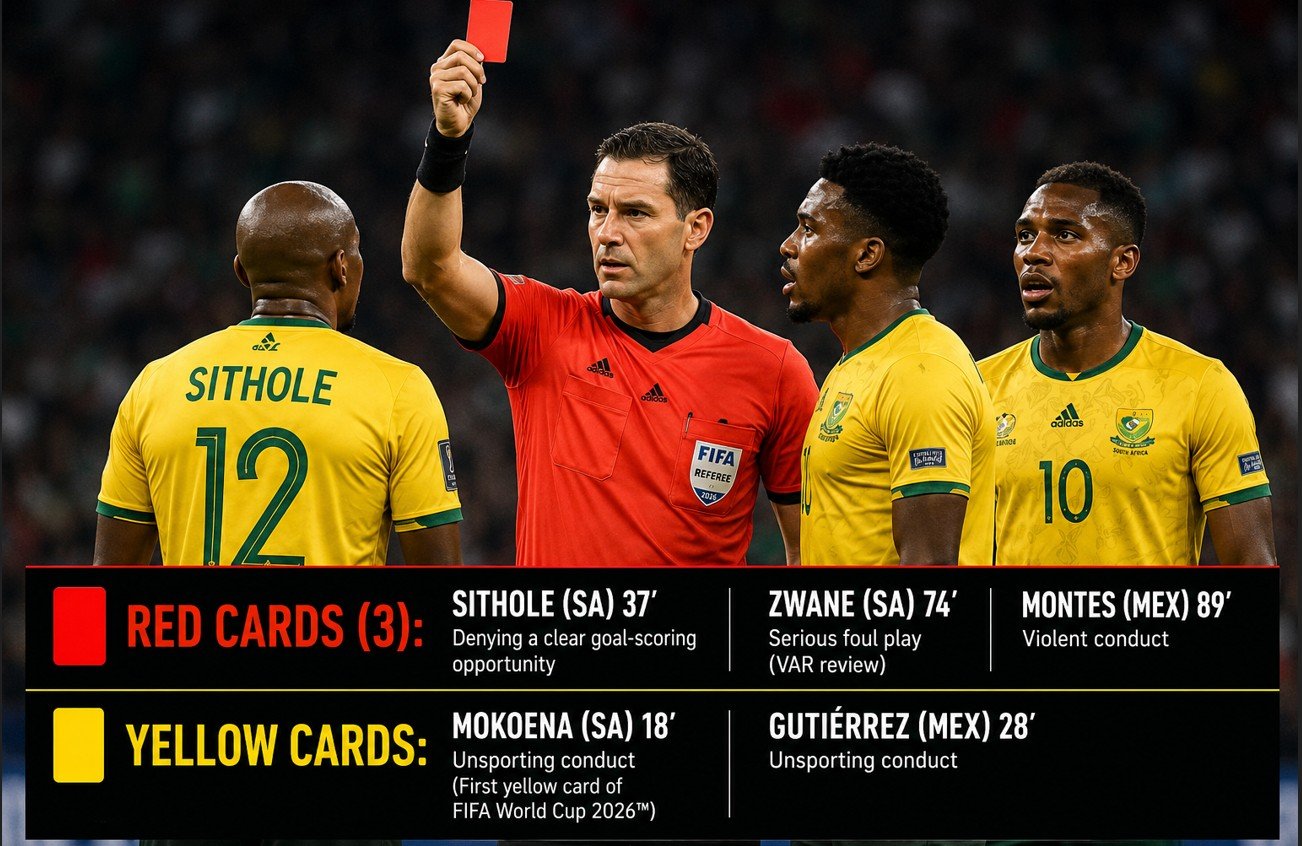
South Africa’s return to the FIFA World Cup began with disappointment as Bafana Bafana suffered a 2-0 defeat against host nation Mexico at the iconic Azteca Stadium. The match became one of the most controversial World Cup opening games in history, producing three red cards, including two for South African players, leaving the African representatives with a mountain to climb.

From the opening whistle, Mexico looked sharper, more organized, and better prepared for the occasion. South Africa struggled to create meaningful attacking opportunities and paid a heavy price for defensive mistakes and disciplinary issues.
Beyond the football, the match sparked conversations across Africa and the global diaspora. On social media, some supporters from other African nations openly backed Mexico, citing lingering frustrations over past xenophobic attacks against fellow Africans living in South Africa. For many observers, it was a reminder that football often reflects deeper social and political emotions.
The reaction surprised many Mexican supporters, who were not accustomed to seeing Africans cheering so passionately against another African nation. The situation also generated debate in Brazil and elsewhere, where commentators noted how international sporting events frequently become platforms through which people express historical grievances, solidarity, identity, and political feelings.
For South Africans, the defeat was painful enough, but seeing criticism from parts of the African community added another layer of disappointment. Nevertheless, football also offers opportunities for reconciliation. Strong performances in the remaining matches could help shift the conversation back to the pitch and remind supporters across Africa that continental unity remains bigger than any single controversy.
The World Cup has always been more than football. Nations celebrate victories, express frustrations, tell their stories, and sometimes even protest through sport. In that sense, the Mexico-South Africa opener was not merely a football match; it was a reflection of the complex emotions, identities, and relationships that continue to shape our modern world.





Leave feedback about this