


By Afribraz Global Business Magazine Editorial Desk
When discussions arise about the greatest football nations in Africa, one country inevitably dominates the conversation: Nigeria.
From producing world-class football stars and winning continental championships to becoming a symbol of African football excellence, Nigeria’s football story is one of triumph, resilience, passion, and sometimes painful contradictions.
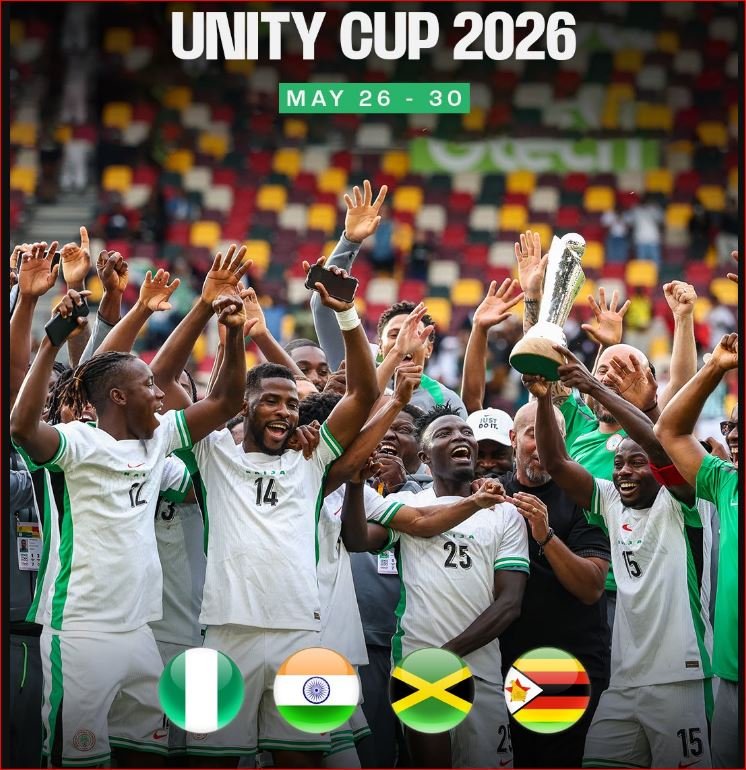
On 30 May 2026, the Super Eagles once again reminded the football world of their pedigree by defeating Jamaica 3–0 in London to lift the Unity Cup for the fourth consecutive time, extending a remarkable record that no other nation has achieved in the history of the competition.
Yet behind the celebrations lies a deeper question that continues to puzzle football analysts, supporters, and observers around the world:
How can one of Africa’s most talented football nations dominate competitions like the Unity Cup and still miss two consecutive FIFA World Cups?
The answer reveals much about modern football, leadership, organization, and the future of the beautiful game in Africa.
Understanding the Unity Cup

The Unity Cup is more than a football tournament.
Created to celebrate diversity, cultural identity, friendship, and unity among diaspora communities, the competition has become one of the most symbolic international football events hosted in the United Kingdom.
The tournament brings together nations with significant diaspora populations while promoting cultural exchange, mutual respect, and national pride.
In many ways, the Unity Cup serves as a bridge between continents, communities, and generations.
The 2026 edition featured Nigeria, Jamaica, Zimbabwe, and India, attracting thousands of supporters and millions of viewers across the world.
For many fans, the tournament is not simply about lifting a trophy. It is about celebrating identity, heritage, and the powerful role sports can play in bringing people together.
Nigeria: The Undisputed Kings of the Unity Cup
History now belongs to Nigeria.
The Super Eagles have won the Unity Cup four times:
2002
2004
2025
2026
No other nation has achieved such dominance.
Four titles.
Four championships.
A record unmatched by any country in the competition’s history.
What makes this achievement even more remarkable is that Nigeria has achieved it across different generations of players and coaches, and across different football eras.
The consistency demonstrates something deeper than talent; it demonstrates a football culture.
Nigeria continues to produce players capable of competing at the highest levels of the game, regardless of economic difficulties, administrative challenges, or changes within the football system.
The 2026 Final: Nigeria 3 – 0 Jamaica

The final against Jamaica was expected to be closely contested.
Both nations possess talented squads and passionate football cultures.
However, once the match began, Nigeria quickly established control.
The Super Eagles displayed tactical discipline, superior organization, and attacking efficiency.
Alhassan Yusuf scored twice.
Terem Moffi added the third goal.
The result was a commanding 3–0 victory that left little doubt regarding the best team in the tournament.
Beyond the scoreline, Nigeria demonstrated confidence, maturity, and depth.
The victory was not merely a triumph.
It was a statement.
The New Faces Behind Nigeria’s Success
One of the most encouraging aspects of the tournament was the emergence of younger players eager to write their own chapter in Nigerian football history.
Among the standout performers were:
Alhassan Yusuf
The midfielder emerged as the hero of the final, scoring twice against Jamaica. His energy, movement, and finishing ability showcased why many believe he represents the future of the Super Eagles midfield.
Terem Moffi
Already established in European football, Moffi provided leadership, experience, and attacking quality. His goal in the final further highlighted his importance to Nigeria’s attacking setup.
Femi Azeez
One of the tournament’s revelations. His impressive performance against Zimbabwe demonstrated creativity, pace, and confidence.
Arthur Okonkwo
The goalkeeper continued to strengthen his reputation as one of the promising options in Nigeria’s national team setup.
Frank Onyeka
Providing stability and balance in midfield, Onyeka’s experience helped maintain Nigeria’s tactical discipline throughout the competition.
Benjamin Fredrick
One of the younger defenders who impressed coaches and supporters alike with his composure and maturity.
Together, these players represented a healthy blend of youth, ambition, and experience.
Eric Chelle: A Coach Under Pressure
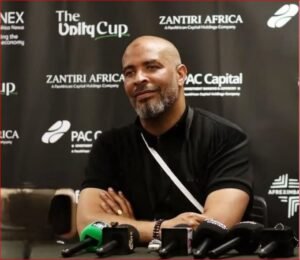
Standing on the touchline was Coach Eric Chelle.
Few coaching positions in Africa come with greater expectations than leading Nigeria.
The Super Eagles are not merely a football team.
They are a national institution.
Every match is analyzed.
Every decision is debated.
Every defeat becomes a national conversation.
Despite immense pressure, Chelle used the Unity Cup as an opportunity to evaluate new players, strengthen tactical structures, and prepare the team for future international competitions.
The result was encouraging.
His squad displayed organization, attacking fluidity, and defensive solidity.
More importantly, he showed that Nigeria possesses far greater squad depth than many observers realize.
Nigeria’s Football Legacy
Few African nations possess a football history as rich as Nigeria.
The country has:
- Won the Africa Cup of Nations three times.
- Won Olympic Gold in football in 1996.
- Produced global stars across multiple generations.
- Participated in numerous FIFA World Cups.
- Established one of Africa’s strongest football development traditions.
Names such as Jay-Jay Okocha, Nwankwo Kanu, Rashidi Yekini, Vincent Enyeama, John Obi Mikel, Victor Osimhen, and many others have carried Nigeria’s flag onto the world stage.
For decades, the Super Eagles have represented excellence, flair, and African football ambition.
The Great Contradiction: Missing Two Consecutive FIFA World Cups
Yet despite this extraordinary history, Nigeria finds itself confronting a painful reality.
The country has failed to qualify for two consecutive FIFA World Cups.
For many supporters, this remains difficult to comprehend.
How can a nation capable of producing elite players year after year fail to reach football’s biggest stage?
The reasons are complex.
Administrative Instability
Football success today depends on long-term planning.
Frequent changes in football administration often disrupt continuity.
Coaching Changes
Constant managerial changes prevent the establishment of a stable football philosophy.
Fierce African Competition
African qualification is arguably one of the most difficult in world football.
Traditional giants now face strong challenges from emerging football nations.
Talent Management Challenges
Nigeria possesses talent abundance.
However, talent alone does not guarantee qualification.
Organization, planning, and player integration remain equally important.
Structural Football Development
While Nigeria produces players naturally, greater investment in grassroots football, coaching education, sports science, and infrastructure remains necessary.
What Does the Unity Cup Winner Receive?
The reward extends beyond the trophy itself.
The champions gain:
- International prestige.
- Enhanced national visibility.
- Valuable competitive experience.
- Increased player exposure.
- Sponsorship opportunities.
- Stronger engagement with diaspora communities.
For Nigeria, the Unity Cup also reinforces its image as one of the most influential football nations in Africa and among global African communities.
The Bigger Lesson for Africa
Nigeria’s Unity Cup success offers an important lesson.
Talent remains Africa’s greatest sporting resource.
However, modern football is no longer won by talent alone.
It is won through planning, administration, investment, infrastructure, and vision.
The countries that combine talent with organization will dominate the future.
Nigeria has already demonstrated that it possesses the talent.
The challenge now is transforming that talent into consistent qualification for the FIFA World Cup and sustained success on the global stage.
Afribraz Global Business Magazine Editorial Perspective
Nigeria’s fourth consecutive Unity Cup triumph is more than a football achievement.
It is a reflection of the country’s resilience, its global diaspora influence, and its enduring ability to produce world-class talent.
Yet the victory should also serve as a reminder.
The same nation capable of dominating the Unity Cup should be competing regularly at the FIFA World Cup.
The objective for Nigerian football can no longer be simply winning regional and invitational tournaments.
The objective must be returning to football’s highest stage and reclaiming its position among the world’s elite football nations.
Until then, Nigerians everywhere—from Lagos to London, Abuja to São Paulo, Kano to Kingston—can celebrate a remarkable achievement.
Four Unity Cup titles.
Four consecutive championships.
One football giant.
One football nation.
And one enduring question:
When will the Super Eagles translate their undeniable talent into consistent World Cup success once again?


Leave feedback about this