


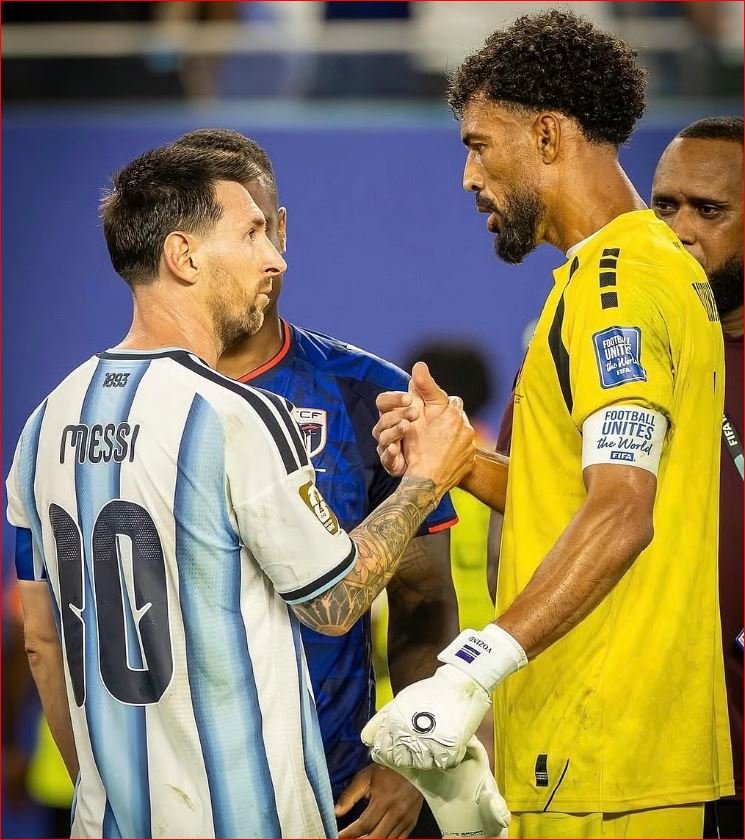
There are World Cup stories measured by trophies – Then there are stories measured by the hearts they conquer.
An Afribraz Global Business Magazine Exclusive Feature
Cape Verde’s extraordinary campaign at the 2026 FIFA World Cup belongs firmly in the second category. What began as the debut of one of the world’s smallest football nations evolved into one of the greatest underdog stories the modern game has ever witnessed. For Africa, it became a powerful reminder that courage, preparation, unity, and belief can challenge even football’s greatest empires.
For Afribraz Global Business Magazine, Cape Verde’s journey represents more than sporting excellence. It is a story about African resilience, intelligent leadership, diaspora strength, and the limitless potential of nations often underestimated by the world.
By the end of their unforgettable campaign, the Blue Sharks had achieved something few teams ever accomplish:
They had earned the admiration of the global football Community, including that of world champion Lionel Messi.
The Atlantic Jewel of Africa
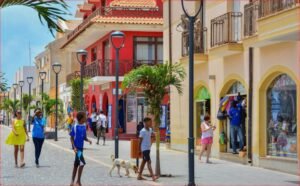
Cape Verde, officially the Republic of Cabo Verde, is an archipelago of ten volcanic islands in the Atlantic Ocean, approximately 570 kilometers off the West African coast.
With a population of just over half a million people, Cape Verde is among Africa’s most peaceful democracies, consistently ranking highly for political stability, governance, human development, and social cohesion.
Its cultural identity blends African traditions with Portuguese heritage, creating one of the continent’s richest musical and artistic landscapes. The soulful rhythms of morna, immortalized by the legendary Cesária Évora, have introduced Cape Verde’s spirit to audiences across the globe.
Visitors are captivated by the colorful streets of Mindelo, the pristine beaches of Sal and Boa Vista, the dramatic mountains of Santo Antão, and the warm hospitality that defines Cape Verdean society.
Despite limited natural resources, the nation has built its success through education, political stability, tourism, and the contributions of its extensive global diaspora—a development model admired throughout Africa.
From Impossible Dream to Historic Qualification
For generations, qualifying for the FIFA World Cup appeared almost unimaginable.
Cape Verde had already earned continental respect through memorable Africa Cup of Nations campaigns, reaching the quarter-finals in 2013 and again in 2023.
Yet football’s greatest stage remained elusive.
That changed forever when the Blue Sharks topped a demanding qualifying group featuring Cameroon, Angola, Libya, Mauritius, and Eswatini to secure direct qualification for the 2026 FIFA World Cup.
The achievement instantly became one of the greatest moments in Cape Verdean history.
Many citizens described it as the country’s greatest national accomplishment since independence.
Across Africa, celebrations extended far beyond Cape Verde’s shores.
The qualification sent a powerful message:
African football is no longer defined solely by its traditional giants.
Africa’s New Football Ambassadors
Many international observers expected Cape Verde simply to enjoy the experience.
Instead, they captivated the football world.
Drawn into one of the tournament’s most demanding groups alongside Spain and Uruguay, the Blue Sharks demonstrated tactical intelligence, defensive discipline, technical quality, and extraordinary mental resilience.
Rather than defending with fear, they competed with confidence.
Each performance strengthened their reputation.
Each match won new admirers.
By the end of the group stage, Cape Verde had become the tournament’s favorite underdog.
Vozinha: The Veteran Who Became Africa’s Hero
Every unforgettable World Cup has its breakout star.
For Cape Verde, that man was goalkeeper Josimar “Vozinha” Dias.
At 40 years old, few expected the veteran goalkeeper to become one of the tournament’s defining figures.
Born in Mindelo, Vozinha had quietly built a professional career across Portugal, Angola, Moldova, Cyprus, and Slovakia without ever becoming an international celebrity.
The World Cup changed everything.
Against Spain, he produced a masterclass.
Against Uruguay, he stood firm.
Against Argentina, he delivered the performance of his life.
His reflexes, leadership, composure, and fearless shot-stopping made him one of the tournament’s most talked-about players. His social media following surged, clubs reportedly showed renewed interest in signing him, and football fans around the world embraced him as one of the World Cup’s most inspiring stories.
Vozinha became living proof that greatness has no age limit and no geographical boundaries.
The Night Argentina Was Forced to Suffer
Then came the match that entered African football folklore.
The reigning world champions, Argentina, led by Lionel Messi, entered the Round of 32 as overwhelming favorites.
Few experts believed Cape Verde could compete.
Even fewer imagined they would push the defending champions into extra time.
But that is precisely what happened.
Cape Verde refused to be intimidated.
They equalized twice.
They matched Argentina’s intensity.
They defended with courage.
They attacked with conviction.
For 120 unforgettable minutes, one of the smallest nations ever to reach the World Cup stood shoulder to shoulder with one of football’s greatest powers.
Only a heartbreaking late own goal finally separated the teams in a dramatic 3–2 defeat.
At the center of everything was Vozinha.
Time after time, he denied Messi and Argentina with remarkable saves, finishing the match with eight crucial stops that kept Cape Verde alive until the very end.
For one magical evening, Africa believed the impossible was within reach.
Argentina survived.
Cape Verde became immortal.
Lionel Messi’s Gesture That Won Even More Respect
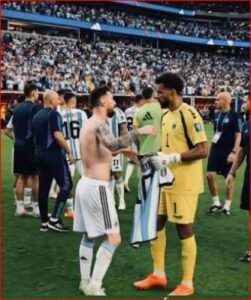
Perhaps the most touching moment came after the final whistle.
Rather than celebrating only Argentina’s qualification, Lionel Messi sought out Cape Verde’s players and especially goalkeeper Vozinha.
According to Vozinha, Messi congratulated him personally and told him:
“You are great. Your people should be proud of you.”
The exchange reflected one of football’s greatest traditions: genuine respect between champions.
Messi’s words acknowledged what millions around the world had already witnessed.
Cape Verde had not merely participated in the World Cup.
They had earned the respect of the defending champions.
The Argentine captain’s gesture resonated across social and international media as an example of humility, sportsmanship, and recognition of a team that had exceeded every expectation.
For Cape Verde’s players, there could hardly have been greater recognition than receiving praise from one of the greatest footballers in history.
More Than Football
Cape Verde’s World Cup journey carries lessons extending far beyond sport.
It demonstrated the power of long-term planning.
It highlighted the importance of investing in youth development.
It showcased the value of engaging a talented diaspora spread across multiple continents.
It reminded Africa that excellence is not determined by population size, economic wealth, or historical prestige.
Instead, success grows from vision, discipline, national unity, and belief.
For millions of young Africans, Cape Verde’s campaign became a lesson in possibility.
Children from small towns, islands, and overlooked communities saw themselves reflected in the Blue Sharks.
They discovered that dreams born in modest circumstances can reach football’s greatest stage.
A New Chapter for African Football
Cape Verde may have left the tournament before lifting the trophy.
Yet few teams departed with greater admiration.
The Blue Sharks transformed global perceptions of African football.
They introduced millions of people to Cape Verde’s culture, resilience, and national identity.
They demonstrated that African football’s future belongs not only to traditional powers but also to emerging nations prepared to dream boldly.
Their campaign also strengthened the broader narrative of African excellence on the global stage, proving that investment in people, institutions, and national identity can overcome limitations of geography or size.
Afribraz Global Business Magazine’s Perspective
Cape Verde’s remarkable World Cup story is ultimately a story about Africa itself.
It is about a continent filled with nations whose greatest resources are not beneath the ground but within their people.
It is about resilience overcoming limitation.
It is about preparation defeating expectation.
It is about dignity earning global respect.
And perhaps nothing symbolized that better than the image of Lionel Messi, the reigning world champion and one of football’s greatest icons, embracing Cape Verde’s heroes and recognizing their extraordinary achievement.
Sometimes history is written by champions.
Sometimes it is written by those courageous enough to challenge them.
Cape Verde did not leave the 2026 FIFA World Cup with the trophy.
It left with something equally enduring:
The admiration of the world, the respect of Lionel Messi, and the pride of an entire African continent.

Leave feedback about this