


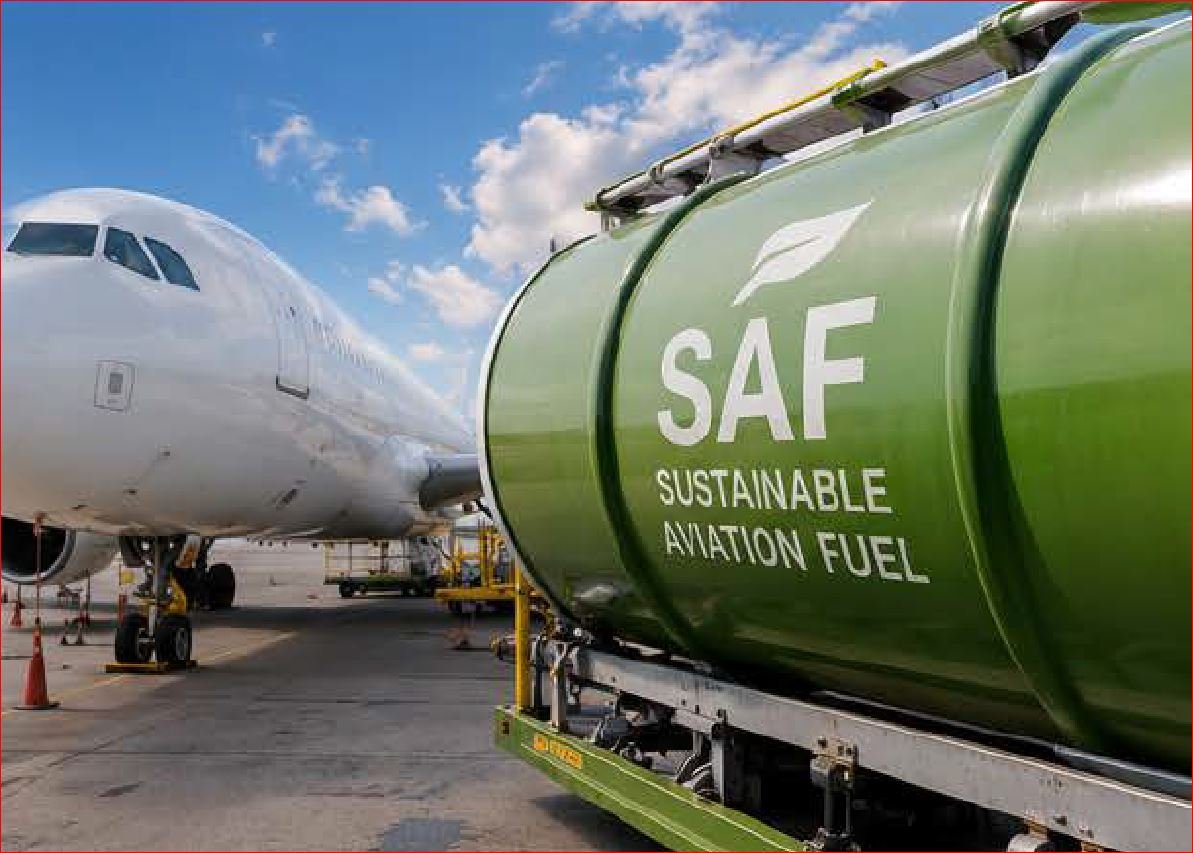
ETHANOL, ALCOHOL, AND THE FUTURE OF CLEAN ENERGY
By Iearoh-AGBM
In the 21st century, few products have become as strategically important to the global economy as ethanol. Far beyond its role as a vehicle fuel or industrial ingredient, ethanol has emerged as one of the pillars of the global energy transition, driving investment, technological innovation, job creation, and sustainable development.
As governments seek to reduce carbon emissions, strengthen energy security, and stimulate green industries, biofuels are taking center stage in public policy and long-term investment strategies. In this context, ethanol stands out as one of the most promising solutions for a cleaner and more sustainable energy future.
WHAT IS ETHANOL AND WHY IS IT SO IMPORTANT?
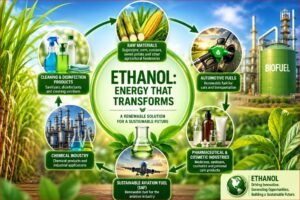
Ethanol, also known as ethyl alcohol, is a renewable biofuel produced through the fermentation of sugars and starches found in various crops.
Its applications extend far beyond transportation. Today, ethanol is widely used in the pharmaceutical, food processing, chemical, and cosmetics industries, as well as in cleaning products, disinfectants, and Sustainable Aviation Fuel (SAF).
With billions of liters produced annually worldwide, ethanol has established itself as one of the most important renewable fuels of the modern era.
THE ECONOMIC AND ENVIRONMENTAL IMPACT OF ETHANOL
The growth of the ethanol industry generates benefits that extend far beyond the energy sector. Domestic production reduces dependence on imported fossil fuels, strengthens national energy security, and stimulates regional economic development.
Its value chain creates opportunities for farmers, researchers, transport operators, engineers, and processing industries, generating employment and income across both urban and rural communities.
Compared to conventional fossil fuels, ethanol significantly reduces greenhouse gas emissions, making it an important tool in addressing climate change and advancing global sustainability goals.
BRAZIL: A GLOBAL LEADER IN BIOFUELS
Among the world’s leading ethanol producers are Brazil, the United States, China, India, Thailand, Argentina, and Colombia.
Brazil is internationally recognized for the success of its sugarcane-based ethanol program. For decades, millions of flex-fuel vehicles have operated across the country using ethanol or gasoline, creating a model admired worldwide.
While the United States relies primarily on corn as its feedstock, Brazil stands out for the efficiency of sugarcane, widely regarded as one of the most competitive raw materials for biofuel production.
THE FEEDSTOCKS TRANSFORMING THE INDUSTRY
One of ethanol’s greatest advantages is its production flexibility, as it can be derived from a wide variety of crops.
Sugarcane remains one of the world’s most efficient feedstocks due to its high sugar content and well-established production infrastructure.
Corn dominates North American ethanol production and maintains strong integration with the global agribusiness sector.
Cassava is gaining momentum in tropical regions of Africa, Asia, and Latin America because of its resilience and adaptability to less fertile soils.
Sweet potato, however, is increasingly being recognized as one of the most promising feedstocks for the future. Its high starch content, short growing cycle, climate adaptability, and potential for multiple annual harvests make it a strategic option for expanding bioenergy production.
ALDO BIODIESEL AND THE SWEET POTATO REVOLUTION IN MATO GROSSO
Among the innovators helping shape the future of bioenergy is Aldo Marcos Batista da Silva, founder of Aldo Biodiesel, headquartered in Tangará da Serra, Mato Grosso, Brazil.
A veteran of the Brazilian Marine Corps and a dedicated researcher, Aldo began his renewable energy research in 2004, developing biodiesel technologies and industrial equipment protected by patents registered with Brazil’s National Institute of Industrial Property (INPI).
In an interview with Afribraz Global Business Magazine, Aldo explained that in 2007, he developed a reactor system associated with the genetic improvement of sweet potatoes for ethanol production in partnership with the Federal University of Tocantins (UFT).
This work led to the creation of the UsinaFlex Platform, Social Ethanol, and Amazon Ethanol projects, all officially registered with INPI. According to Aldo, the goal is to integrate family farming into the energy matrix, enabling the simultaneous production of food, ethanol, and biodiesel in a sustainable and economically viable manner.
The technology allows multiple feedstocks to be processed while generating starch, low-carb flour, ethanol, biodiesel, crude glycerin, and bioplastics, expanding opportunities within both agribusiness and the bioeconomy.
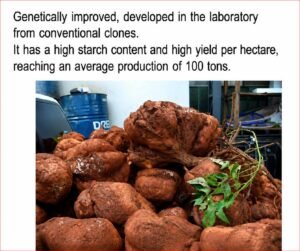
Another major achievement is the development of Industrial Sweet Potato varieties in Mato Grosso since 2013. As an officially recognized plant breeder, Aldo has registered eight high-yield cultivars designed specifically for energy and industrial applications.
According to him, the greatest advantage of the system is its flexibility.
“We are creating an alternative capable of generating energy, income, jobs, and sustainable development, not only for Brazil but also for other countries seeking to strengthen their renewable energy matrices,” he says.
FOOD OR FUEL?
The debate over food security and biofuel production has accompanied the expansion of renewable fuels for decades. However, experts increasingly argue that technological advances and productivity gains make it possible to meet growing demands for both food and energy simultaneously.
Today, the conversation has shifted toward agricultural efficiency, intelligent land use, sustainable farming practices, circular bioeconomy models, and the integration of food and energy production systems.
WHERE ARE THE INVESTMENT OPPORTUNITIES?
The ethanol industry offers opportunities across the entire value chain.
In agriculture, investment opportunities include feedstock production, genetic improvement, seed development, and precision farming technologies.
In the industry, prospects range from distilleries and industrial equipment manufacturing to fermentation technologies and enzyme production.
Logistics also plays a critical role, encompassing storage, transportation, exports, and energy infrastructure.
In addition, carbon credit markets and Sustainable Aviation Fuel (SAF) are attracting billions of dollars in global investment, positioning themselves as key growth sectors for the future of bioenergy.
AFRICA’S GREAT OPPORTUNITY
With vast agricultural land, favorable climate conditions, and rapidly growing energy demand, Africa possesses exceptional potential to become a global biofuels powerhouse.
Countries such as Nigeria, Angola, Ghana, Tanzania, Kenya, Ethiopia, and Mozambique have the resources needed to build competitive ethanol industries capable of generating employment, accelerating industrialization, and strengthening energy independence.
In this context, Brazil’s experience could play a crucial role through technology transfer, technical training, agricultural research, and business cooperation.
WHY DOES THIS MATTER NOW?
The global energy transition is about much more than changing fuel sources. It represents economic growth, rural industrialization, job creation, energy security, technological advancement, and environmental sustainability.
Countries that invest today in bioenergy, research, and innovation will be better positioned to lead the green economy of the future.
CONCLUSION
Afribraz Global Business Magazine concludes that ethanol will remain one of the central pillars of the emerging global energy economy.
Produced from sugarcane, corn, cassava, sweet potatoes, and other renewable resources, ethanol represents a concrete opportunity for governments, investors, farmers, entrepreneurs, and researchers alike.
More than simply an alternative to petroleum, ethanol has become a strategic instrument for promoting sustainable development, wealth creation, technological innovation, and energy security.
The question is no longer whether bioenergy will be part of the future.
The real question is: Which countries, companies, and investors will be prepared to lead the next global energy revolution?




Leave feedback about this