

From Nigerian pioneer Richard Owubokiri in Bahia to Angolan champions, Ghanaian wingers, Cameroonian defenders, and African prospects in Brazil’s biggest clubs, the 2025–26 season is signaling a new chapter in Brazil–Africa football relations.
By Afribraz Global Business Magazine | Sports & Business.
Brazil has long been one of football’s great talent factories. Brazilian clubs have sent players to Europe, Asia, and the Middle East for decades. But a quieter transformation is underway: Brazil is increasingly becoming a destination for African football talent.
The change is still in its early stages. Europe remains the main destination for African players, and Africans remain a relatively small minority in the Brazilian league. Yet the difference between the past and the 2025-26 period is significant.
In January 2026, it was reported that the Brazilian Série A and Série B had 14 players from African countries. By August, Série A alone had 11 African players, and the number of foreign players in the 2026 Brasileirão had already reached 172, matching the full-season total of 2025 with 15 rounds to play.
This is not yet an African invasion of Brazilian football. It is something more interesting: the beginning of a scouting, development, and commercial relationship between Brazil and Africa.


THE STORY STARTED WITH RICHARD “RICKY” OWUBOKIRI
Before African players were a serious topic in Brazilian football, a young Nigerian striker crossed the Atlantic. His name was Richard Daddy Owubokiri, better known as Ricky. Born in Port Harcourt, Nigeria, on July 16, 1961, Owubokiri began his career with Sharks and ACB Lagos before moving to Brazil in the early 1980s. He first played for América-RJ and then became an important figure at Esporte Clube Vitória in Salvador, Bahia. His arrival was remarkable because African footballers playing professionally in Brazil were extremely rare at the time.
Ricky became more than an imported player at Vitória. He became a local star. He scored Vitória’s only goal in a 1-1 Ba-Vi derby on his debut and eventually became one of the most famous foreign players in the club’s history. He was also a top scorer in the Campeonato Baiano in the mid-80s. His Brazilian experience then led to Europe, where he played for Laval and Metz in France, Benfica in Portugal, and Estrela da Amadora and Boavista before returning to Vitória in 1994. Ricky’s story also went beyond the pitch.
After finishing his playing career, he coached and eventually moved into a football agency and business. In an interview with Diário de Notícias, he said he had returned to Salvador and was working as a football agent.
That is really important.
Ricky was not just one of the first African players in Brazil. He became part of the Brazilian football ecosystem. And for many years, his example remained an exception rather than the beginning of a major trend.
FOR DECADES, THE DOOR REMAINED ONLY SLIGHTLY OPEN
After Ricky, Brazil had other African players, but the numbers were still modest.
Cameroonian goalkeeper William Andem played for Cruzeiro in the 1990s before moving to Bahia in 1997. Angolan Johnson Macaba played for Brazil and appeared in the Campeonato Brasileiro with Gama and Goiás. Nigerian Benji Nzeakor represented Vitória in the 1990s while Mozambican Nuno Robalo played for Paysandu.
Later on, players such as South African Mark Williams, Sierra Leone’s Aluspha Brewah, South African Ty Sandows, and Ivorian star Salomon Kalou joined Botafogo in 2020.
The pattern was clear: African players could succeed in Brazil, but Brazilian clubs were not systematically looking to Africa as a major recruitment market. That is changing.
2024–2025: THE BREAKTHROUGH BECOMES VISIBLE
Bastos Quissanga was a key figure in this new phase, the Angolan center-back who joined Botafogo in 2023.
Bastos was central to Botafogo’s historic 2024 campaign, when they won both the Brasileirão and the CONMEBOL Libertadores. With his success, Brazilian football gained a highly visible African representative at the highest level.
His impact was not limited to Rio de Janeiro.
In Angola, Bastos dramatically raised Botafogo’s profile. The defender became an emblem of the connection between the club and his country, and Brazilian football became much more popular among Angolan fans.
This was important for Brazil-Africa relations.


The message was simple:
An African player could come to Brazil, become a starter at a major club, win Brazil’s biggest domestic competition, win the Libertadores, and become a bridge between two football markets.
Bastos remained with Botafogo through the first half of 2026, making 13 Série A appearances according to CBF records, before the club terminated his contract in July 2026.
His Brazilian chapter may have ended, but his legacy does not.
2025: AFRICAN TALENT BEGINS TO LOOK LESS EXOTIC
The 2025 season, just before the 2026 FIFA World Cup, also signaled a shift in the market.
Série A featured African players such as Bastos (Angola) of Botafogo. Yannick Bolasie (DR Congo) of Cruzeiro. Billal Brahimi (Algeria) of Santos. Loide Augusto ( Angola) of Vasco da Gama. Ogundana Shola (Nigeria) of Flamengo.
Bolasie became especially visible to Brazilian audiences after his successful spell with Criciúma before moving to Cruzeiro in 2025. He moved to Chapecoense for the 2026 season.
In the background was Nigerian forward Ogundana Shola, another chapter in the movement. Rather than arriving in Brazil as an established European star, Shola came through Flamengo’s development system, showing that Brazilian clubs were beginning to look to Africa not only for finished players but also for young prospects. Brazilian clubs such as Flamengo, São Paulo, Vasco, and Bragantino have been scouting African youth markets. Brazil is no longer looking only for African stars. It is increasingly looking for African talent to develop.
2026: THE AFRICAN PRESENCE BECOMES MORE DIVERSE
The current 2026 Brasileirão is the clearest evidence yet. As of August 20, Série A featured 11 African players from Angola, Ghana, the Democratic Republic of Congo, Cameroon, Guinea, and Cabo Verde.
Some of the most prominent names include: Francis Amuzu (Ghana, Grêmio, Attacker/Winger). Jovane Cabral, Cabo Verde, Grêmio, Attacking midfielder/Forward. Mamady Cissé, Guinea, Atlético-MG, Midfielder. Duplexe Tchamba, Cameroon, Remo, Center-back. Yannick Bolasie, DR Congo, Chapecoense, Forward. Zakaria Labyad, Morocco, Corinthians, Midfielder. João Pedro, Guinea-Bissau/Portugal, Remo, Forward. Benjamin Arhin, Ghana, Internacional, Midfielder. Koné, Côte d’Ivoire, Palmeiras, Defender. Tiecoura Konaté (Mali), Palmeiras, young prospect. Miguel Bilong, Cameroon, Palmeiras, young forward/prospect.
The exact composition of club squads can change during transfer windows; however, the overall direction is unmistakable.
GHANA’S FRANCIS AMUZU: FROM BELGIUM TO PORTO ALEGRE
Francis Amuzu is one of the strongest examples. Born in Accra, Ghana, Amuzu grew up in Belgium and spent his career at Anderlecht before joining Grêmio in February 2025. By 2026, he was a key attacking player for the Porto Alegre club. Before the 2026 World Cup, his performances were strong enough to earn him a call-up to the Ghana national team. His story shows how Brazil can function as a second-stage football market. An African player might develop in Europe, move to Brazil, compete in one of the world’s most-watched domestic leagues, and potentially use that platform to enhance his international career.
The relationship is no longer simply Africa → Europe. It can increasingly become: Africa → Europe → Brazil → Africa’s national teams and the global market.
JOVANE CABRAL: FROM THE 2026 WORLD CUP TO GRÊMIO
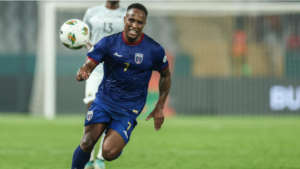
Another obvious example from 2026 is the 2026 season. Jovane Cabral, a Cape Verde international, joined Grêmio in July 2026 after representing Cabo Verde at the FIFA World Cup. He signed with the Porto Alegre club through the end of 2027 and arrived in Brazil after playing in Portugal, Italy, and Greece.
His arrival is symbolic. A player who had just appeared at the 2026 World Cup chose Brazil as his next professional destination. That would have been a far less common career decision for an African international a few decades ago.

CAMEROON’S DUPLEXE TCHAMBA: BRAZIL AS A DEVELOPMENT PLATFORM
Even more important than the established stars is the emergence of young African players. Duplexe Tchamba, a Cameroonian defender, joined Remo in 2026 and quickly became one of the club’s most important defenders.
According to ge, after arriving in March, he became an undisputed starter and played in all 14 matches for the rest of the season. Remo’s strategy itself tells a larger story.
The Pará club expanded its international recruitment, and at one point in 2026 it had 11 foreign players. Tchamba was among the most successful of those acquisitions. For an African player, Brazil could also offer something different from Europe: competitive football, tactical development, visibility, and the chance to establish a career in a country where football is embedded in everyday culture.
MAMADY CISSÉ: FROM A TOURNAMENT IN NIGERIA TO ATLÉTICO-MG
The story of Mamady Cissé may be the clearest illustration of where Brazilian football could be heading. Cissé is Guinean, but Atlético-MG discovered him while he was playing for 36 Lion FC in Nigeria. He arrived in Brazil in May 2025, just 18 years old. Within months, Atlético’s staff guided him through its youth structure, transition team, and professional environment.
By 2026, he had broken into the senior squad and received a call-up to the Guinea national team. Brazilian clubs are beginning to recognize Africa’s enormous football potential, while African players can benefit from Brazil’s technical culture and competitive environment.
PALMEIRAS IS LOOKING EVEN FURTHER AHEAD
The most recent move may be even more significant. In August 2026, Palmeiras drew attention by signing young African prospects, including Ivorian defender Koné, Malian defender Tiecoura Konaté, and Cameroonian attacker Miguel Bilong. Koné and Bilong were originally recruited for development and have already trained with the professional group since the World Cup. This marks a major shift from the Ricky era.
Ricky arrived in Brazil as an established Nigerian international in search of a professional opportunity. Today’s model is Brazilian clubs going to Africa to find players before they become global stars.
Also Read:
Rising From Brazil, Rooted in Africa: The Inspiring Volleyball Journey of Frida Eze and Jasmin Eze
Fifa World Cup 2026: Power, Politics, Preparation & Global Football Shift
WHAT ABOUT NIGERIA AND MOZAMBIQUE?
Nigeria’s historical relationship with Brazilian football is especially significant because of Ricky Owubokiri, a pioneer. The current Nigerian presence is smaller than many would expect, especially in Série A.Samuel Otusanya is another example of this new path, having moved from the Brazilian lower leagues to Athletic-MG for the 2026 Série B. He had already attracted attention at Náutico, where he was a fan favorite.
Mozambique has a different situation. The country has a historical link to Brazilian football through Nuno Robalo, who played for Paysandu in the 1990s, but Mozambique does not currently have the same level of representation in the 2026 Série A.
That absence is itself an opportunity. Portuguese-speaking African markets, especially Angola, Mozambique, Cabo Verde and Guinea-Bissau, have a natural linguistic bridge with Brazil that could make recruitment, player adaptation, media relations and commercial partnerships easier.
FROM THE LIBERTADORES TO THE SUL-AMERICANA
In addition, African players are increasingly competing in competitions beyond their domestic leagues. Bastos’ role in Botafogo’s 2024 Libertadores victory is the strongest recent example. He was part of the team that lifted South America’s most prestigious club trophy, giving an African defender a place in Brazilian and continental football history. In 2026, Mamady Cissé and Atlético-MG are participating in the Copa Sudamericana, and Cissé has become more integrated into the club’s professional structure. Atlético’s records show him in the Brazilian season and the Sudamericana campaign in 2026. Continental competitions matter because they give African players exposure beyond Brazil.
A successful African player in Brazil is not only competing for a place in a Brazilian starting XI. He is potentially competing before audiences across Brazil, South America, Africa, Europe, and the global football market.
WHY ARE BRAZILIAN CLUBS LOOKING TO AFRICA NOW?
Several factors are converging.
1- African talent is becoming more visible. The performances of African national teams at recent World Cups and continental competitions have reshaped perceptions of African football. Brazilian clubs now view African football as a serious talent pool rather than unexplored territory.
The strengthening of African national teams has increased interest among Brazilian clubs.
2- Scouting technology has changed the game. Brazilian clubs and specialist recruitment companies can now conduct remote analysis of tens of thousands of players. Platforms and scouting networks help clubs identify young talent in countries such as Ghana, Senegal, Angola, and Guinea-Bissau, as well as other African markets.
3- Brazil offers technical development. Brazilian football is not about physical competition. The country’s technical, tactical, and positional traditions make it a good place for young players to develop.
4- The economics work. African players can be less expensive than those on the European market, while Brazilian clubs can provide a platform for development and subsequent international transfers.
5- Brazil itself is getting more international. The 2026 Brasileirão has already featured 172 foreign players, underscoring how quickly Brazilian clubs are internationalizing their teams.
THE BUSINESS OPPORTUNITY BEHIND THE FOOTBALL
For Brazil and Africa, this story is bigger than football. Every African player who excels in Brazil can open commercial opportunities.
There are opportunities for:
African football academies partnering with Brazilian clubs;
Brazilian clubs establishing scouting programs in Africa;
player-development companies;
football-agent networks;
sports tourism;
internet, broadcasting, and digital content;
sponsorship and brand partnerships;
Brazilian technical staff working with African academies;
African investors entering Brazilian sports;
Brazilian football technology companies entering African markets.
Business relationships can grow much larger.
THE DOOR IS OPEN, BUT IT IS NOT YET WIDE OPEN
It would be premature to say that Brazil has become a major African football destination on the scale of Europe.
As of August 2026, only 11 of the African players in the Série A’s African team were from that continent, compared with 46 Argentines, 31 Uruguayans, and 29 Colombians. So Brazil has not replaced Europe.
But the direction is changing. The difference today is that Brazilian clubs are actively scouting Africa, rather than just waiting for African players to arrive through agents. And that may be the most important development of all.
FROM RICKY’S FOOTSTEPS TO THE NEXT GENERATION
Richard Owubokiri arrived in Brazil at a time when an African player in Brazilian football was almost a curiosity. He played in Rio de Janeiro, became an idol in Salvador, returned to Bahia after his European career, and remained connected to Brazil’s football and business environment. Decades later, Bastos lifted the Libertadores and Brasileirão with Botafogo.
Bolasie became well known in Brazilian football. Amuzu established himself at Grêmio.
Jovane Cabral arrived from the 2026 World Cup. Tchamba became a defensive leader at Remo.
Cissé traveled from a youth tournament in Nigeria to Atlético-MG and the Guinea national team.
And Palmeiras is now looking at young African players before they become household names.
Ricky’s journey to Cissé is therefore more than a list of football transfers; it is, however, a story about access. The Brazilian football door that has only occasionally opened to Africans is now opening more deliberately, and this signifies a lot for Africa; for Brazil, it means access to one of the world’s richest pools of young football talent.
And for the broader Brazil-Africa relationship, it may mark the beginning of a new sports, investment, and cultural corridor. The first African pioneers came to Brazil seeking opportunity. The next generation could eventually arrive because Brazil is actively looking for them.
EDITOR’S NOTE
To be precise, we use the phrase “African players in Brazilian football” rather than “Africans playing for the Brazilian national team.” The players discussed here represent their African countries on the international stage while playing for Brazilian clubs. As of August 2026, there is no African-born player representing the Brazil senior men’s national team.
Updated: August 24, 2026
Sources: Brazilian Football Confederation (CBF), ge, GZH, ESPN, UOL, Exame, A Bola, and historical football records.