

Food, Culture & Diaspora
From fufu and egusi soup to ndolé, jollof rice and pepper soup, São Paulo’s growing African food scene is giving Africans a taste of home and inviting Brazilians to discover the continent through its kitchens.
By IEAroh – Afribraz Global Business Magazine
For many African immigrants to Brazil, discovering São Paulo is nothing short of thrilling. The city is huge, multicultural, and full of restaurants from almost every part of the world.
But after a few days, or sometimes only a few hours, one important question usually comes to mind:
“Where can I find real African food?”
Not an African-inspired recipe or something reinvented out of hand, but the old food you grew up eating, with familiar ingredients, generous seasoning, and patience in a mother’s kitchen.
The kind of food that brings fufu together with egusi, bitterleaf, ora, or okra soup. The kind of table where one hopes to find jollof rice, white rice and stew, thieboudienne (often called chep or ceebu jën)—Cameroonian ndolé, Ghanaian banku, or Nigerian banga rice and ofe akwu.
And when the craving becomes more specific, perhaps what the heart begins to ask for is isiewu, nkwobi, ngwo-ngwo, assorted meat pepper soup, or another delicacy whose aroma can instantly transport someone back to Lagos, Enugu, Accra, Douala, Dakar, Kinshasa, or Luanda.
The reassuring news is simple: relax, you can now find classic, traditional, and genuinely African “mama-made” food in São Paulo.
Food That Feels Like Home
African food is much more than something eaten to satisfy hunger. It carries identity, family memories, and community.
A bowl of soup with fufu can bring back memories of Sunday afternoons at home. The smell of jollof rice might recall weddings, birthdays, and Christmas celebrations. Pepper soup brings back memories of getting together with friends, and a person’s ndolé, banku, egusi, or ofe akwu can connect them to a particular family, ethnic community, or region.
That emotional connection is particularly important to Africans living abroad. In a foreign country, familiar food can provide comfort, a sense of belonging, and continuity. It reminds the immigrant that, though the physical distance from home may be great, culture can still be preserved around the table.
São Paulo’s African restaurants are thus more than just commercial establishments. They are meeting places, cultural embassies, and bridges connecting Africa with Brazil.
Biyou’z: A São Paulo Reference in African Gastronomy
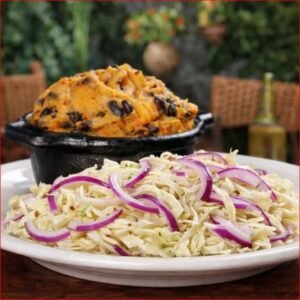


Biyou’z Gastronomia Africana is another important place. Created by Cameroonian chef Melanito Biyouha, the restaurant has brought São Paulo diners to the diversity of African cuisine.
Biyou’z does not treat Africa as though it had only one culinary identity. Instead, it combines recipes and influences from Central and West Africa, reflecting a continent of many countries, peoples, and food traditions.
Visitors can enjoy fufu, ndolé, fish, plantain, okra-based sauces, peanut preparations and Cameroonian specialties. Among its well-known dishes are Bicoye-chicken served with okra sauce and rice fufu, and Ndumbe, a seasoned fish fritter accompanied by an aromatic Cameroonian sauce. The restaurant’s menu also includes egusi and other big dishes to be enjoyed with traditional accompaniments. Diários Gastronômicos
Biyou’z is available in Campos Elíseos, at Alameda Barão de Limeira, 19, and in Consolação, at Rua Fernando de Albuquerque, 95. Diners should contact the restaurant before visiting to confirm availability of a particular traditional dish, as schedules and menus can change.
Mama Africa La Bonne Bouffe: Cameroonian Warmth in Tatuapé
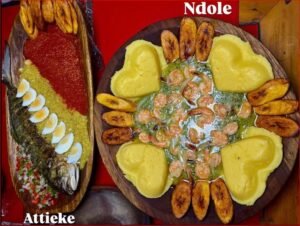

One of the most prominent names in São Paulo’s African gastronomic landscape is Mama Africa La Bonne Bouffe, located in Tatuapé, in the city’s East Zone.
The restaurant conveys African hospitality with warmth and generosity. Its atmosphere, decor, and personal service create a feeling of being very welcome, and the experience extends beyond ordering food: we are invited to see the ingredients, the preparation, and the food’s cultural background.
Mama Africa is known for Cameroonian cuisine but also shares flavors with the rest of the continent. Fish, plantains, couscous, lamb, vegetarian dishes, and ingredients like egusi, ogbono, peanuts, and traditional leafy vegetables have all been included. Drinks such as hibiscus and ginger juice are added to the experience.
From Chef Sam’s perspective, the restaurant will be a warm welcome for Africans who are away from home and Brazilians who want to experience African cooking in a more authentic way. It is located at Rua Cantagalo, 230, Tatuapé, but customers should verify the current hours and availability before traveling. Guia Negro.
Congolinária: Congolese Tradition Through a Vegan Kitchen
African cuisine in São Paulo also shows that tradition can be preserved even as contemporary dietary choices are embraced.
At Congolinária, Congolese chef Pitchou Luambo offers plant-based interpretations rooted in the culinary culture of the Democratic Republic of the Congo. The restaurant’s food is vegan, yet it remains connected to African ingredients, techniques, and memories.
Preparations featuring okra, peanuts, plantains, and vegetables, for example, show that African cuisine offers a wide range of possibilities beyond meat. Dishes such as Kuku, along with okra and peanut paste, and Pilao provide another dimension of the continent’s food culture.
Congolinária is located at Avenida Professor Alfonso Bovero, 382, in Sumaré. Catraca Livre.
Manden Baobá and the Flavors of Several African Regions
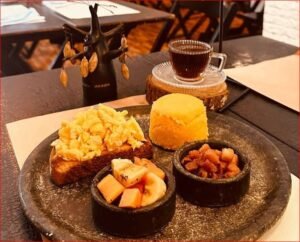

Another name associated with African gastronomy in São Paulo is Manden Baobá, located in Vila Mariana.
Its menu features a variety of national and regional dishes from Mali, Angola, and South Africa. Some of the dishes include tigadèguèna, a rich peanut sauce; mufete, an Angolan dish made with fish and traditional accompaniments; and bobotie, a South African specialty.
The restaurant also celebrates the baobab, one of Africa’s most powerful cultural symbols. The fruit appears in beverages and desserts, another link between the restaurant and the continent.
Manden Baobá has been operating at Rua Capitão Cavalcanti, 33, near Vila Mariana station. Visitors should check its operating hours before going. Guia Negro.
Le Petit Village: Food, Music and Community
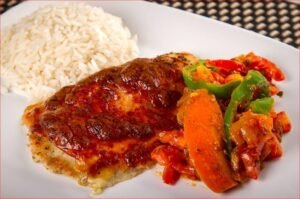

In the case of those seeking a warmer and more informal African setting with food, music and social interaction, Le Petit Village in Vila Buarque is a place to meet with African immigrants.
The experience may include whole grilled fish, spicy sauces, plantain, seasoned meatballs, and drinks, accompanied by music and conversations in several African languages. It is the kind of place where the meal is part of a community experience.
Le Petit Village has been on Rua Marquês de Itu, 252. As with all establishments, customers are advised to confirm its latest schedule and menu. Guia Negro
One Continent, Thousands of Food Traditions
It is important to remember that there is no single “African cuisine.”
Africa has 54 recognized countries and a vast array of ethnic groups, languages, climates, and culinary traditions. Nigerian egusi soup is different from Cameroonian ndolé. Ghanaian banku is different from Congolese pilao. Senegalese ceebu jën has its own history, and Angolan mufete, Mozambican dishes, and Ethiopian stews are unique cultural identities. Even within Nigeria, recipes differ dramatically. Egusi, bitterleaf, oha, okra, banga, and ofe akwu may be prepared differently depending on region, ethnicity, and family tradition. One person’s idea of the perfect soup may not be the same as another’s, and that’s the beauty.
For that reason, no single restaurant should be expected to serve every African dish every day. Some foods may be available only through advance orders, weekend menus, community catering, or special events. Anyone looking for a particular meal, particularly isiewu, nkwobi, ora soup, bitterleaf soup, or a particular style of fufu, should call or message the restaurant ahead of time.
An Opportunity for African Entrepreneurs to Find and Work.
The development of African restaurants in São Paulo is also an important business story.
The city is home to African immigrants, diplomats, students, entrepreneurs, tourists and families, as well as millions of Brazilians increasingly interested in understanding their country’s African heritage.
This opens up opportunities for restaurants, food delivery services, catering businesses, African grocery stores, ingredient importers, culinary festivals and cooking classes. It also opens doors for cultural tourism and business partnerships between African food brands and the Brazilian market.
Supporting these establishments supports immigrant entrepreneurship. It helps chefs maintain their traditions, employ people, introduce African products to new consumers, and challenge the mistaken idea that African cuisine can be reduced to one or two dishes.
Also Reads:
São Paulo is ready to welcome you to the African table.
So if you are going to Brazil and wondering whether you will find food that tastes like home, you can breathe easier.
São Paulo already has kitchens where fufu is prepared to accompany rich sauces; where fish, plantain, okra, peanuts, egusi, and traditional vegetables are treated with respect; and where African hospitality is offered alongside the meal.
Not every restaurant will have your favorite dish on every visit. Or maybe you will need to order in advance or ask members of the African community about a home-based cook specializing in your country’s cuisine. But the flavors are here, the community is growing, and the table is getting larger.
São Paulo has something for you, whether you are Nigerian, Cameroonian, Ghanaian, Senegalese, Congolese, or Angolan, or simply someone hungry to discover Africa through its food.
Come hungry. Come curious. Come ready to share.
Because sometimes, thousands of kilometers away from Africa, it takes an aroma, one big plate, and a delicious mouthful of food for you to feel at home again.