
Genetically Modified Foods, Ultra-Processed Foods and the Growing Health Debate
Health | Food | Wellness
By Afribraz Global Business Magazine – Editorial Desk.
The modern food system is under growing scrutiny, from genetically modified crops to ultra-processed foods, chemicals, and chemical exposure. But are all modern foods dangerous?
Food is meant to nourish the body. Yet around the world, consumers are increasingly asking a difficult question: Is the modern food system making us healthier or contributing to the chronic health problems affecting millions of people?
The debate has intensified through the Make America Healthy Again (MAHA) movement and the U.S. administration’s MAHA Commission, which has put childhood chronic disease, nutrition, food production, chemical exposure, and ultra-processed foods at the core of a national health conversation. The White House says the initiative is intended to tackle chronic disease, enhance nutrition, and prioritize prevention.
But there is an important distinction: not all genetically modified food is dangerous, and not all processed food is dangerous. The scientific evidence does not support the blanket claim that today’s food supply is “very, very dangerous” simply because genetically modified ingredients are present.
The real concern is broader and probably more complicated.
THE MAHA MOVEMENT EMERGES
The Make America Healthy Again movement grew out of concern for chronic health problems, especially among children.
The MAHA Commission was established in February 2025 with the goal of first understanding and addressing childhood chronic disease. It also examines potential contributions from diet, environmental exposures, food production, certain food ingredients, lifestyle, government policies, and related factors.
The MAHA Report subsequently identified four areas as potential drivers of the childhood chronic-disease crisis, including poor diet, exposure to environmental chemicals, physical inactivity, and chronic stress. It particularly criticized the growing dependence on ultra-processed foods.
This is important because the MAHA argument is not limited to genetically modified food.
Its central concern is the overall food and health environment: what people eat, how food is produced, which ingredients are added, how often highly processed products are consumed, and how these factors may interact with other environmental and lifestyle exposures.
IS GENETICALLY MODIFIED FOOD THE MAIN PROBLEM?
This is where the public debate needs to be examined closely.
Genetically modified (GM) food is produced from organisms whose genetic material has been altered using modern biotechnology. GM technology is used for purposes such as insect and virus resistance and herbicide tolerance.
There are legitimate questions about biotechnology, including:
How should new GM foods be evaluated? Could a new protein cause an allergic reaction? Could genetic modification lead to unintended nutritional or toxicological changes? How can we assess the environmental effects of genetic changes? How should long-term monitoring be conducted?
These are reasonable scientific and regulatory questions.
However, the claim that most food is genetically modified and therefore dangerous to human health is not supported by the evidence.
The World Health Organization states that GM foods should be evaluated on a case-by-case basis, as different GM organisms contain different genes and are produced using different techniques. WHO also says that GM foods currently available on the international market have passed safety assessments and that no demonstrated human health effects have resulted from their consumption in populations where they have been approved.
That does not mean that every future GM product should automatically be considered safe. It means that “genetically modified” by itself is not a scientific definition of toxicity.
THE BIGGER QUESTION: WHAT IS BEING PUT INTO OUR FOOD?
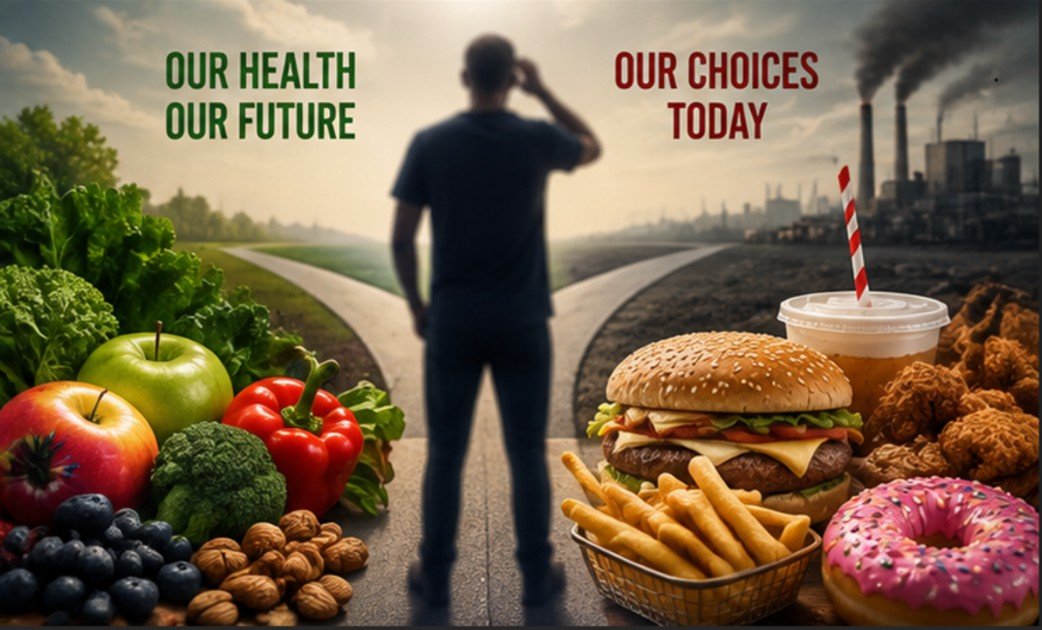
The MAHA discussion becomes particularly relevant when it shifts from genetic modification to ultra-processed foods, excessive added sugars, refined grains, certain additives, and chemical exposures.
According to the MAHA Report, about 70% of children’s calories in the United States come from ultra-processed foods, and the report cites poor diet and high consumption of these foods as an important possible driver of chronic disease.
Ultra-processed foods can include products such as:
Sugary drinks
Candy and confectionery
Packaged snacks
Some breakfast cereals
Refined baked products
Highly processed meats
Instant meals
Some packaged desserts
Foods containing refined starches, added sugars, fats, flavorings, and other ingredients
The problem is not that all packaged food is poisonous. Rather, a pattern of eating highly processed, energy-laden foods can eclipse nutrient-rich whole foods.
That distinction is really important.


FOOD ADDITIVES: SHOULD CONSUMERS BE WORRIED?
Food additives are also a major part of the debate.
Colorants, preservatives, stabilizers, emulsifiers, sweeteners, and other additives are used for technological purposes such as maintaining texture, preventing spoilage, improving appearance, and extending shelf life.
The WHO notes that food additives should be evaluated for safety before approval, and the Joint FAO/WHO Expert Committee on Food Additives (JECFA) is a key international body that assesses potential risks.
At the same time, safety assessment should not be treated as a reason to stop asking questions.
Regulatory science advances. New evidence can change the picture of exposure levels, vulnerable populations, and long-term effects.
The MAHA movement’s call for greater transparency and investigation therefore aligns with a true public health principle:
Consumers deserve to know what is in their food and how those ingredients have been evaluated.
WHAT ABOUT PESTICIDES AND CHEMICAL EXPOSURE?
This is another area where the MAHA discussion extends beyond GMOs.
Pesticides, herbicides, fertilizers, and other technologies form the basis of modern agriculture. Some genetically modified crops have been designed to tolerate herbicides, and others have been engineered to resist insect damage.
Therefore, the food safety conversation cannot simply ask:
Is this food genetically modified?
It should also ask:
What chemicals were used to produce it?
At what concentrations?
How was exposure evaluated?
What happens to people exposed to such levels over many years?
Children and other vulnerable populations will be protected. How do we do so?
These questions require toxicology, epidemiology, agricultural science, and regulatory oversight, not fear or political slogans.
WHY THE MAHA MESSAGE RESONATES WITH MANY PEOPLE
Regardless of political affiliation, the MAHA discussion has tapped into a genuine consumer concern:
We want to know what we are eating.
The movement is also about returning to whole, nutrient-rich foods and focusing on prevention rather than treatment only when disease develops. The White House says its current approach is about prevention, nutrition, and better information for families.
As a result, this message resonates because today’s consumers face an enormous food environment.
A supermarket can have thousands of products, all of them designed to be inexpensive, convenient, attractive, highly palatable, and long-lasting.
This can lead a person to consume many calories without necessarily getting the same amount of nutrients.
BUT WE SHOULD NOT TURN FOOD FEAR INTO FOOD SCIENCE
There is a danger on the opposite side of the debate.
If every modern agricultural technology is labeled as toxic, consumers may be frightened of foods that have undergone extensive safety evaluation.
The WHO’s position is instructive:
GM foods should be evaluated individually, including potential toxicity, allergenicity, nutritional effects, and unintended effects. WHO does not classify all GM foods as inherently unsafe.
Similarly, not all processed foods are nutritionally equivalent, and not every additive poses the same level of risk.
Evidence-based scrutiny is preferable to blanket condemnation.


WHAT SHOULD CONSUMERS DO?
In today’s food technology landscape, consumers need not abandon it to make healthier choices.
They can start with straightforward principles:
- Eat more whole foods.
Vegetables, fruits, legumes, whole grains, nuts, seeds, and properly prepared animal or plant proteins can form the basis of a balanced diet.
- Cut back on ultra-processed foods.
The goal is not necessarily to eliminate all packaged products. Instead, highly processed foods need not be the main focus of the diet.
- Read ingredient labels.
Look beyond marketing terms like “natural,” “healthy,” or “light.” Read the ingredients list and nutritional information to see the actual ingredients and nutritional content.
- Cut out excessive added sugar.
High sugar intake is linked to excess calories and metabolic problems.
- Diversify the diet.
A varied diet reduces reliance on a single food source and increases exposure to a wider range of nutrients.
- Pay attention to digestive symptoms.
Heartburn, abdominal pain, unexplained weight loss, vomiting, difficulty swallowing, blood in the stool, or persistent digestive problems need medical evaluation.
- Ask questions about food production.
Consumers should be able to ask where food comes from, how it was produced, what ingredients it contains, and how those ingredients are regulated.
THE FUTURE OF FOOD: TECHNOLOGY OR TRADITION?
In the future, both will likely be needed.
The world population requires reliable food production, so agricultural biotechnology is important for crop protection, productivity, and nutritional improvement. WHO recognizes the potential benefits of biotechnology while emphasizing the need for continued safety assessment.
At the same time, society must face the consequences of the growing dominance of ultra-processed products in the diet.
The challenge is therefore not GM versus non-GM.
It is about designing a food system that balances:
nutrition + safety + affordability + sustainability + transparency + scientific evidence.
THE AFRIBRAZ GLOBAL BUSINESS MAGAZINE VIEW
The MAHA movement has sparked a global conversation.
Its strongest contribution may not be the claim that a particular technology is responsible for modern disease. It is a demand for a closer examination of the entire food–health relationship.
What do we eat? How much do we eat? How is it produced? What chemicals and additives are involved? How much processing has occurred? What evidence supports its safety?
What are the long-term effects on children, and what would the world look like in the future?
These are questions worth asking.
But responsible journalism would also need to separate legitimate concerns from scientifically proven claims.
Genetic modification is a technology, not so much a threat. Ultra-processed diets, high sugar consumption, food contamination, and certain chemical exposures are separate issues that will require both evidence and risk assessments.
The future of public health may ultimately depend less on choosing between “old food” and “new food” and more on creating a food culture that prioritizes quality, transparency, moderation, nutrition, and evidence over convenience and marketing.
A healthier future begins with a simple question:
Before we put food on our plate, do we really know what we are putting into our bodies?
Editorial note
This article focuses on MAHA and the scientific debate of modern food production. It does not imply that all genetically modified foods are dangerous because the evidence does not support such a blanket conclusion. Food-related health conditions should be assessed by qualified healthcare professionals.
Sources: World Health Organization; White House/Make America Healthy Again Commission and MAHA Report; FAO/WHO food safety framework.
Read Below:
Raysida 4H: A Grassroots Agro-Movement Driving Food Security
Gastritis, Difficult Digestion, Gastrointestinal Health: What Your Stomach May Be Trying to Tell You
How Agricultural Innovation, Science, and Biofuels Are Reshaping the Global Economy