


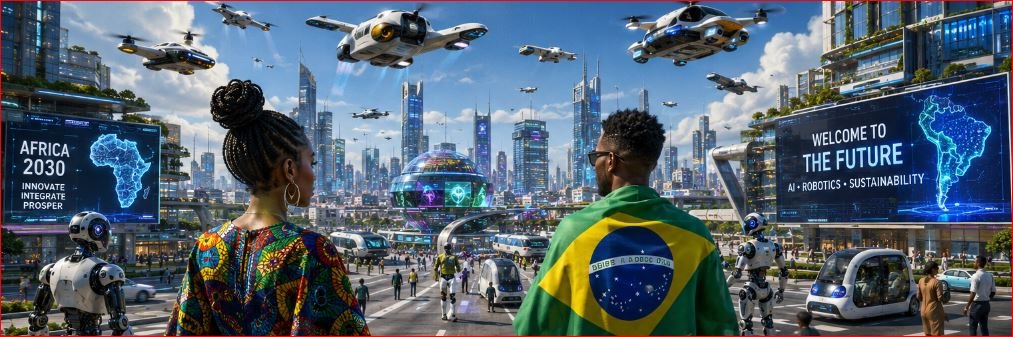
Technology may decide who grows, who works, who leads, and who disappears.
Afribraz Global Business Magazine explores the rise of Big Tech and the battle between innovation, opportunity, and human existence.
By 2030, the world may look more technologically advanced than anything humanity has ever experienced. The rise of Big Tech companies, such as Microsoft, Apple, Google, Amazon, Meta, Tesla, NVIDIA, and other global digital giants, is no longer just about smartphones, social media, or online shopping. It is about controlling the future infrastructure of humanity itself.
Artificial Intelligence, robotics, cloud computing, biotechnology, autonomous transportation, digital finance, quantum computing, and data systems are becoming the new oil of the modern world. Nations that dominate technology may dominate economics, security, education, health, communication, and even culture.
Experts now predict that by 2030, the global cloud computing industry alone could surpass US$2 trillion in value, while the Artificial Intelligence market is projected to become one of the largest economic sectors on Earth.
The question is no longer whether technology will shape the future.
The question is: Who will be prepared for it?
Why Information Technology Is the Future
Technology today is not just an industry. It is becoming the foundation of every industry.
Banks depend on digital systems.
Hospitals depend on AI diagnostics.
Agriculture depends on drones and smart farming.
Transportation depends on automation.
Education depends on online learning systems.
Military defense depends on cyber intelligence.
Business depends on digital visibility.
Even small local businesses now rely on digital payments, online marketing, data systems, and social platforms to survive.
By 2030, digital technology will likely influence almost every human decision, from how people work, shop, communicate, travel, learn, invest, vote, and even build relationships.
According to the World Economic Forum, over 1 billion people worldwide may require reskilling due to technological transformation and AI-driven changes in the workforce.
This means that technological literacy may soon become as important as reading and writing.
Why Young People Must Understand Technology
One of the biggest mistakes many young people make is believing technology only matters for computer scientists or programmers.
That is no longer true.
A musician now needs digital distribution.
A footballer needs social media branding.
A doctor needs AI systems.
A businessman needs online visibility.
A journalist needs digital media skills.
A farmer needs smart agricultural tools.
A teacher needs virtual learning systems.
Even if someone chooses another profession entirely, understanding technology is becoming essential for survival in the modern economy.
The youth of today are not preparing for the world of 1990.
They are preparing for the world of 2030 and beyond.
Countries that fail to train their youth digitally may face massive unemployment, economic dependency, and social instability.
The Rise of the Robotic World
Humanity is gradually entering the age of intelligent machines.
Factories already use robotic systems for production.
Restaurants are experimenting with robot waiters.
Warehouses increasingly use autonomous robots.
Hospitals now use robotic surgical systems.
AI assistants are replacing many administrative tasks.
The next phase may become even more dramatic.
By 2030, many experts believe autonomous AI agents and robotics will dominate industries such as logistics, transportation, healthcare, manufacturing, customer service, and finance.
This transformation will increase efficiency and productivity, but it also raises a frightening question:
What happens to millions of workers replaced by machines?
Flying Cars and Autonomous Transportation
What once looked like science fiction is slowly becoming reality.
Several technology and automotive companies are already testing flying taxis, autonomous vehicles, electric aircraft, and AI-controlled transport systems.
Tesla continues pushing autonomous driving technologies, while companies across Asia, Europe, and the Middle East are investing heavily in urban air mobility systems.
By 2030, some cities may begin operating limited commercial flying taxi systems, especially in wealthy urban regions.
Autonomous transport could reduce traffic accidents, improve delivery systems, and reshape city infrastructure entirely.
But there are concerns:
- Cybersecurity risks
- AI decision failures
- Job losses for drivers and transport workers
- Dependence on centralized digital systems
Technology solves problems, but often creates new ones.
The Cashless World
The global economy is rapidly moving toward digital finance.
Online banking, QR payments, digital wallets, cryptocurrencies, biometric payments, and central bank digital currencies are expanding worldwide.
In some countries, physical cash usage has already declined dramatically.
The benefits are enormous:
- Faster transactions
- Easier global trade
- Reduced robbery risks
- Financial inclusion
- Better business tracking
However, a cashless society also creates serious concerns:
- Loss of privacy
- Government surveillance
- Digital exclusion in poor communities
- Cybercrime
- Total dependency on internet systems
Imagine a world where your entire financial existence depends on electricity, internet access, and digital verification.
A single cyberattack could affect millions instantly.
Human and Animal Cloning: The Ethical Debate
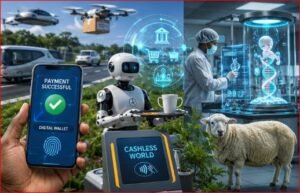
Science is now entering areas once considered impossible.
Animal cloning already exists in several parts of the world. Scientists continue researching advanced genetic engineering, synthetic biology, organ replication, and gene editing technologies.
While full human cloning remains highly controversial and restricted in most countries, biotechnology continues to advance rapidly.
Supporters argue that genetic science may help:
- Cure diseases
- Replace damaged organs
- Improve food production
- Extend human lifespan
- Prevent hereditary illnesses
Critics warn of dangerous consequences:
- Ethical confusion
- Genetic manipulation abuse
- Biological inequality
- Human identity crises
- Potential illegal experimentation
Humanity is now approaching scientific powers once imagined only in movies.
The challenge is whether wisdom will grow as fast as technology.
The Positive Side of Big Tech
Technology has undeniably transformed human civilization positively.
Health
AI can now detect diseases faster than before. Robotic surgery improves precision. Digital health systems save lives daily.
Education
Online learning allows millions to study from anywhere in the world.
Business
Small businesses now reach global markets through digital platforms.
Communication
Families and companies communicate instantly across continents.
Agriculture
Smart farming increases food production efficiency.
Finance
Digital systems simplify international business and entrepreneurship.
Innovation
Technology creates entirely new industries and opportunities.
By 2030, AI, cloud computing, and data infrastructure are expected to become multi-trillion-dollar sectors globally.
The Dangerous Side of Big Tech
Yet behind the bright future lies a darker reality.
Mass Surveillance
Governments and corporations increasingly collect personal data.
Job Displacement
Automation may replace millions of workers globally.
Digital Addiction
Social media and AI systems already affect mental health and attention spans.
Cybercrime
Hackers now threaten banks, governments, hospitals, and private individuals.
Economic Inequality
The countries and companies controlling technology may become overwhelmingly powerful.
Loss of Human Skills
People increasingly depend on machines for thinking, navigation, memory, and communication.
Digital Colonization
Poorer nations risk becoming dependent consumers instead of creators of technology.
What Happens to the Digitally Illiterate?
One of the greatest future dangers may not be poverty alone. It may be digital ignorance.
A person unable to use technology in 2030 may struggle with:
- Banking
- Employment
- Education
- Healthcare access
- Government services
- Communication
- Transportation systems
- Business opportunities
Digital exclusion could create a new form of global inequality.
Those who fail to adapt may become economically invisible.
This is why technology education matters not only for engineers but for everybody.
Why This Matters to You and Me
Many people still believe the future is far away. But the future has already started.
Every smartphone notification, digital payment, AI chatbot, online transaction, biometric verification, cloud system, and social media algorithm is already shaping human behavior.
The child learning coding today may become tomorrow’s billionaire innovator.
The nation investing in AI today may dominate tomorrow’s economy.
The business ignoring digital transformation today may disappear tomorrow.
Technology itself is not the enemy. Ignorance is.
The real challenge of the coming digital age is whether humanity will use technology to empower society or allow technology to control society.
By 2030, Big Tech may not simply influence the world. It may define it.
And the decisions made today by governments, businesses, schools, parents, and young people will determine whether that future becomes a golden age of innovation, or a divided world where only the digitally powerful survive.






Leave feedback about this