


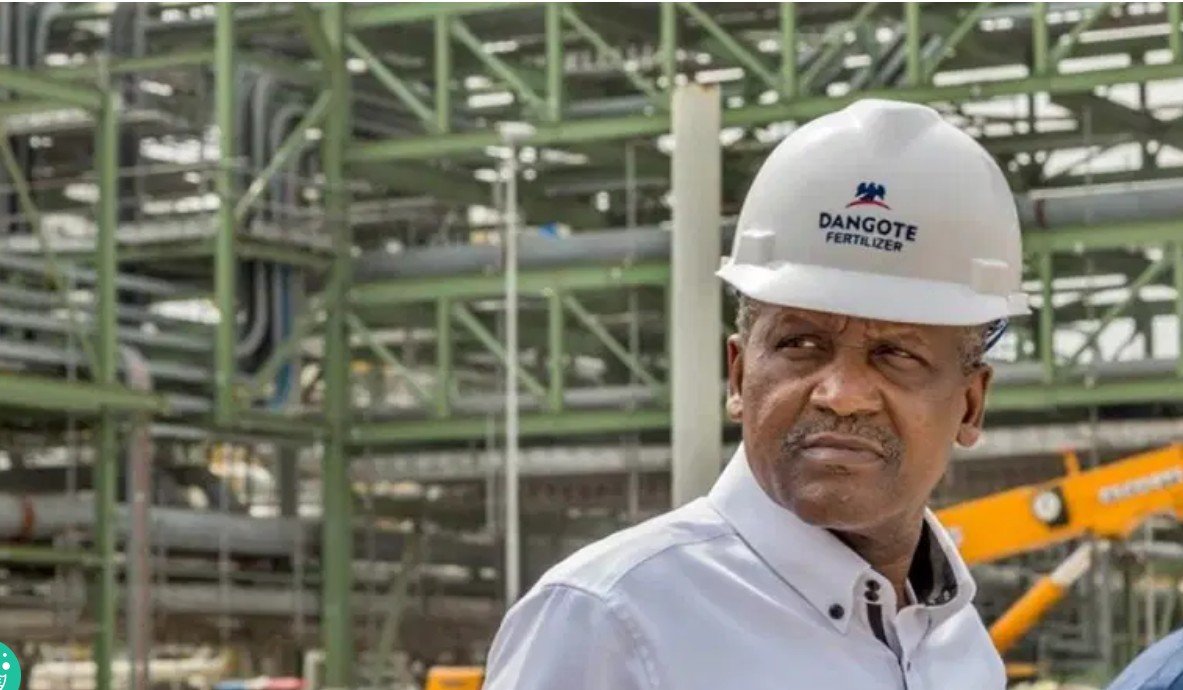
In a bold and strategic expansion, Dangote Group has officially entered crude oil production in Nigeria’s Niger Delta, marking a significant evolution from its position as Africa’s refining giant to a fully integrated energy powerhouse.
The company has commenced production at the Kalaekule field, with an initial output of approximately 4,500 barrels per day (bpd). This is expected to increase to 15,000 bpd in the short term, with ambitious projections to scale up to 40,000 bpd in the near future.
A Strategic Response to Refinery Supply Challenges
His upstream move comes in the wake of supply challenges faced by the Dangote Refinery, the world’s largest single-train refinery. Despite its massive capacity of 650,000 bpd, the refinery has struggled to secure a consistent supply of competitively priced crude oil.
Disagreements with Nigerian National Petroleum Company Limited over pricing and supply terms exposed a critical vulnerability: refining capacity without guaranteed upstream access.
Dangote’s entry into oil production directly addresses this gap by ensuring:
- Greater control over crude supply
- Reduced exposure to market volatility
- Enhanced operational stability
Ownership Structure and Strategic Collaboration
The Kalaekule field reflects a hybrid partnership model:
- 85% owned by Dangote Group
- 15% held by NNPC
While this signals continued collaboration with the state, it also highlights a subtle shift toward private-sector-led energy control, a growing trend across Africa’s oil and gas landscape.
Reviving the Niger Delta’s Mature Assets
The Kalaekule field is part of a broader strategy to revive dormant or underperforming oil assets in the Niger Delta. Rather than pursuing high-risk exploration, Dangote is leveraging:
- Existing infrastructure
- Proven reserves
- Faster production timelines
This approach reduces capital risk while accelerating returns—an increasingly important strategy in today’s uncertain global energy market.
Toward a Fully Integrated Energy Ecosystem
Dangote’s upstream expansion signals the emergence of a vertically integrated energy model in Africa—where extraction, refining, and petrochemicals operate within a single ecosystem.
This integration offers multiple advantages:
- Stable feedstock for refining operations
- Increased efficiency across the value chain
- Stronger bargaining power in global energy markets
It also aligns with the company’s broader ambition to expand into petrochemicals and industrial manufacturing, positioning Nigeria as a regional export hub.
Implications for Africa and Brazil
For Africa, this development represents a powerful blueprint:
- Energy sovereignty through private investment
- Industrialization driven by local resource control
- Reduced dependence on imported fuels
For Brazil, where Petrobras has long demonstrated the strength of integrated oil operations, Dangote’s model offers a parallel one driven by private capital but aligned with national interest.
The convergence of these approaches highlights a growing South-South dynamic, where emerging economies are redefining global energy leadership.
The Bigger Picture
Dangote’s move into upstream oil production is more than a business decision—it is a strategic statement about Africa’s future.
From refining imported crude to producing its own, Nigeria is taking a decisive step toward energy independence, industrial growth, and economic resilience.
As production ramps up from 4,500 to potentially 40,000 barrels per day, the Kalaekule field may well become a symbol of a new era, one where Africa not only powers itself but begins to shape the global energy narrative.




Leave feedback about this