

How women leaders are transforming business, government, finance, innovation, and sustainable development
An Exclusive Afribraz Global Business Network feature by I.e.aroh
Women are redefining what leadership looks like in Africa, Brazil, and the Caribbean. They’re running big financial institutions, creating international brands and public services, driving global trade and finding solutions to climate change.
Their journeys are different, yet several of them are connected: courage, competence, resilience, social responsibility and the conviction that leadership must create opportunities for others.
For many of those women, the journey did not start in a boardroom. It started in an ordinary community, a family business, a local bank branch, a classroom, or a public-service office. They went on learning and changing, and refusing to let gender, race, nationality or economic status define the limits of their ambition.
In this Afribraz Global Business Network spotlight, six influential women whose stories tell us a lot about the new generation of leaders are presented.
Ngozi Okonjo-Iweala: Bringing African Experience to Global Trade.
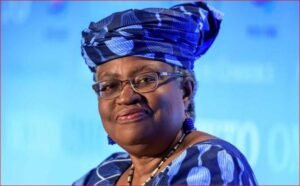

Dr. Ngozi Okonjo-Iweala’s journey started in Nigeria, where she received her early education before going on to Harvard University and the Massachusetts Institute of Technology. She developed an international career as a development economist at the World Bank and served twice as Nigeria’s minister of finance.
Her professional life has been one of the most difficult in the world of leadership: economic reform, public finance, debt negotiations, institutional accountability and international development. She was instrumental in negotiations that helped bring huge debt relief for Nigeria.
So in 2021 she became the first woman and the first African to lead the World Trade Organization. Her appointment wasn’t just personal; it showed that African women could direct institutions that determine the rules of the global economy.
In developing countries, Okonjo-Iweala believes trade should enhance people’s lives. She is based on reform, international collaboration, and a fairer global trading system. She has also always advocated for more economic participation of women.
Her story matters because it demonstrates that an African woman can transition from national public service to the highest level of global economic leadership without losing touch with the reality of developing countries. Having worked in Africa, the U.S., and Europe, she brings a global perspective on economic reality to global decision-making. Read her leadership profile.
Bethlehem Tilahun Alemu: Transforming Ethiopian Heritage into Global Enterprise
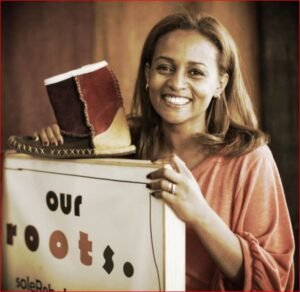

Bethlehem Tilahun Alemu is one of a generation of African entrepreneurs who are determined to change the image of dependency to one of creativity, production, and global competitiveness.
She grew up in Zenebork, a working-class community in Addis Ababa, Ethiopia. There were talented artisans but no jobs. Rather than thinking of what the neighborhood did not have, she saw that there were skills, cultural knowledge, and potential for a good life already there.
She set up soleRebels from a workshop on land owned by her grandmother. Inspired by traditional Ethiopian footwear made of recycled tyre soles, she began a sustainable footwear business with local craftsmanship in conjunction with contemporary design.
Her guiding belief is powerful: African prosperity can be created by Africans using local talent, resources and cultural knowledge. She wanted to show that an internationally competitive brand could originate in an Ethiopian community, not as a charity project, but as a serious commercial enterprise.
Bethlehem subsequently expanded her entrepreneurial work into leather goods and Ethiopian coffee. Her businesses link cultural identity to employment, sustainability, and international market access.
Her example matters because she did not separate business success from community empowerment. She created a model in which heritage becomes intellectual and commercial value, artisans become participants in international trade, and local production becomes a source of dignity.
Her leadership challenges investors to see Africa not only as a consumer market or destination for aid, but as a continent of designers, producers, innovators and brand builders.
Luiza Helena Trajano: Business Leadership with a Social Purpose.
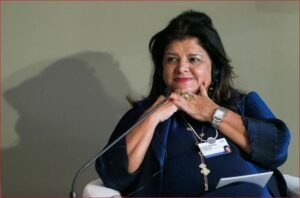

Luiza Helena Trajano is one of Brazil’s most well-known business leaders. Through Magazine Luiza, she built a family retail business in São Paulo State that has become one of Brazil’s most prominent retail and technology groups.
Her beginning was practical and customer-centered. She worked within the company’s operations and came to know about the business from the perspective of its employees and consumers. This, in turn, became the basis for a leadership style of proximity, communication, and attention to our people.
Magazine Luiza grew, and she went all-in on digital transformation. But her leadership goes beyond corporate performance. Grupo Mulheres do Brasil is a civil-society movement for feminism that speaks to women about gender equality, education, entrepreneurship, employment, and social inclusion.
Trajano believes that a company should be connected to the society in which it operates. Leadership is not just about making financial results, she said in her model. It is also about listening, developing people and using influence to tackle structural issues.
Her story is especially relevant for women in family businesses. She shows that having a firm or coming from a well-established business does not mean there is no need for innovation. Each generation needs to lead by making the organization and positioning it in a new market.
In June 2026, she received a leadership award at the South Summit in Madrid for her business success and social impact. Magazine Luiza’s corporate profile reflects her continuing role in the group’s leadership.
Tarciana Medeiros: From a Bank Branch to the Presidency


Tarciana Medeiros provides one of the most inspirational examples of career advancement in a major Brazilian institution.
She was a teacher and market vendor before entering banking. She joined Banco do Brasil in 2000 and started working at a branch in Paraíba. She worked in different parts of the bank for more than two decades: retail business, customer relationships, insurance and credit solutions.
She is the first woman serving as president of Banco do Brasil in more than two centuries of history.
Her appointment was especially important because she is a Black woman from Brazil’s Northeast, a region historically underrepresented at the highest levels of Brazilian finance.
Medeiros’ power is not only because of a high rank. It comes from understanding the institution from within. Her progress allowed her to see customers, employees, and various sectors of banking up close before being responsible for the whole business.
Her leadership is about inclusion, sustainability and financial institutions’ capacity to contribute to economic and social development. This is why organizations must create real pathways for employees to progress, not only publicize commitments to diversity. Her trajectory is important for every young woman as she starts in an entry-level job. The first job title does not have to determine the destination. With education, performance, preparation, and institutional opportunity, a professional can move from the front line to the presidency. Banco do Brasil’s official profile shows her more than 20-year career and progression through various executive responsibilities. See the bank’s executive leadership.
Mia Amor Mottley: Caribbean Leadership with a Global Voice
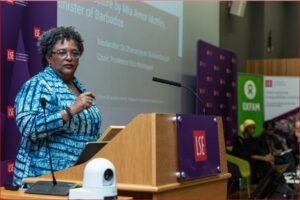

Mia Amor Mottley demonstrates how the leader of a small island nation can influence some of the world’s largest institutions.
Born into a Barbadian family with a tradition of public service, Mottley trained as a lawyer and entered politics at a young age. She served in a number of different ministerial and parliamentary posts before being elected Barbados’ first female prime minister in 2018.
Her leadership has extended far beyond Barbados’ borders. She has become an internationally recognized advocate for climate justice and reform of the global financial system.
For Caribbean countries, climate change is not an abstract future threat. Hurricanes, rising seas, coastal erosion and economic vulnerability already threaten communities, public finances, tourism and infrastructure. Mottley has therefore argued that international financial institutions must provide fairer and more accessible support to climate-vulnerable developing countries.
Her approach is founded on the idea that vulnerable countries should not be left waiting in the dark while decisions about their survival are being made elsewhere. Through the Bridgetown Initiative and her interventions at global forums, she has challenged the international community to reconsider how climate action and development are financed.
In 2026, she secured a third consecutive term as prime minister, further cementing her political power at home and in international campaigning. Barbados’ official government profile highlights her national leadership, but her climate diplomacy has also become a topic of worldwide conversation.
Mottley matters because she shows leadership influence is not determined by the population, territory or economic power of one’s country. A Caribbean nation’s clarity of purpose, credibility and courage can give it a powerful voice in global affairs.
Racquel Moses: Connecting Caribbean Innovation with Climate Investment
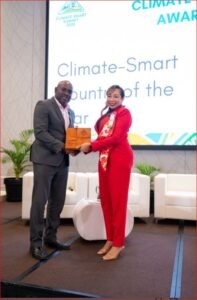

Racquel Moses of Trinidad and Tobago is among leaders at the intersection of technology, business development and climate resilience.
Her early studies were in organizational psychology and law, and she later studied advanced technology management. She was already an active Caribbean climate advocate before starting a corporate and executive career in the technology industry, with leadership responsibilities at Microsoft.
She went on to lead the Caribbean Climate-Smart Accelerator, an organization that brings together governments, investors, entrepreneurs, technology developers and development partners to advance climate-resilient projects throughout the region.
Her work addresses a central Caribbean challenge: how to turn climate vulnerability into investment, innovation and sustainable economic development.
Moses believes that the region cannot continue using conventional methods while expecting different results. During her leadership, the accelerator has developed cooperation in renewable energy, resilient infrastructure, transportation, food security, tourism and responsible use of marine resources.
Her story matters because she connects three areas that are too often left to their own devices: technology, investment and environmental survival. Climate action is not just a government responsibility, she demonstrates; it’s also a business opportunity, an innovation challenge and a forum to work together in regional areas.
The organization’s work underscores the importance of matching private-sector capacity and investment with entrepreneurs who have practical solutions. The Caribbean Climate-Smart Accelerator describes this collaborative, implementation-focused approach.
What Their Journeys Teach Us
These six women lead in different situations, but they share common principles.
Leadership starts before the title
Most influential leaders spend years learning, working, and solving problems before they get their public recognition. Tarciana Medeiros built her banking career over more than two decades. Ngozi Okonjo-Iweala honed her knowledge of national and international organizations. Luiza Trajano learned business from actual experience on the ground.
Leadership is not created on the day of an appointment. It is built through preparation.
Empowerment must create pathways for others.
True empowerment is not just about recognizing one successful woman. It requires institutions that allow many more women to advance.
Women need access to high-quality education, professional networks, finance, mentorship, technology, procurement opportunities and decision-making positions. They also need fair systems that recognize merit without gender, race or social origin being permanent barriers.
Identity can be a source of economic power
Bethlehem Tilahun Alemu turned Ethiopian craftsmanship into international products. Caribbean women leaders are turning regional climate vulnerability into globally relevant policy and innovation. Brazilian women are using the country’s diversity and consumer-market experience to establish new leadership models.
Cultural identity should not be lost to succeed internationally; these examples show. If taken well and developed, it can become a strategic advantage.
Leadership must combine performance with purpose.
Businesses have to remain financially sustainable, governments have to deliver results, and institutions have to be effectively managed. But modern leadership is also judged by its social and environmental impact.
The most respected leaders combine competence with a clear understanding of whom their decisions affect.
Why Women’s Leadership Matters to Africa, Brazil, and Caribbean Cooperation
Africa, Brazil and the Caribbean share deep historical, cultural and human connections. They also face common challenges: inequality, lack of access to capital, climate vulnerability, infrastructure gaps and the underrepresentation of women in senior decision-making.
Greater cooperation among women leaders from these regions could produce significant results in:
Trade and investment;
Agribusiness and food security;
Banking and financial inclusion;
Technology and digital transformation;
Tourism and the creative economy;
Renewable energy and climate resilience;
Education and professional development;
Healthcare and social enterprise;
Media, culture and international representation.
The next step should be to move beyond ceremonial recognition. Women entrepreneurs and executives need structured platforms where they can meet investors, enter new markets, exchange knowledge and build long-term partnerships.
From Visibility to Lasting Influence
Women in leadership should not be presented as exceptional cases who succeeded despite being women. They should be recognized as qualified professionals whose contributions are indispensable to economic and institutional progress.
The responsibility does not rest only with women. Governments, corporations, financial institutions, universities, media organizations and business networks must help create environments in which women can lead without being required to overcome unnecessary structural barriers.
Young women also need to see leadership stories in their complete form, not only the awards, titles and public appearances, but also the modest beginnings, setbacks, difficult decisions, continuous learning and years of work behind every achievement.
The women highlighted here matter because their success expands what others believe is possible. They prove that leadership can emerge from Addis Ababa, Paraíba, Barbados, Trinidad and Tobago or any community where talent is given the opportunity to grow.
Africa, Brazil and the Caribbean do not suffer from a shortage of capable women. The real challenge is ensuring that their abilities are recognized, financed, connected and placed where important decisions are made. Women who actually lead, not just hold out for it, are able to change institutions, build communities, open markets, and help build bridges for the generations to come.
Afribraz Global Business Network—connecting Africa, Brazil and the Caribbean through leadership, business, investment and shared opportunity