

As anti-immigration protests intensify, South Africa faces difficult questions about democracy, economic stability, and the future of Pan-African integration. History suggests the continent has traveled this road before, with costly consequences.
By the Editorial Team
Afribraz Global Business Magazine
Nearly three decades after the end of apartheid, South Africa once again finds itself confronting one of the most profound questions facing any democracy: Who belongs? Who is protected? And who becomes the convenient scapegoat when a nation struggles with unemployment, inequality, crime, and political frustration?
The anti-immigration protests that culminated in the self-imposed 30 June deadline announced by activist groups have exposed deep fractures within South African society. Although organizers maintain that their campaign targets undocumented migration, developments on the ground have painted a far more complex and troubling picture.
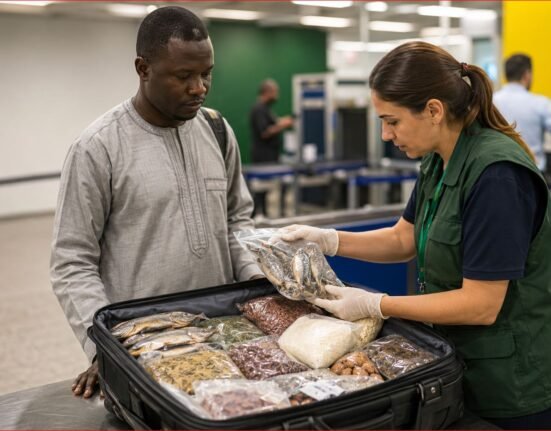
Fear, intimidation, business disruptions, forced displacement, and attacks have affected thousands of foreign nationals, including many who hold valid immigration documents, own legally registered businesses, employ South Africans, pay taxes, and contribute to local economic development.
What was initially presented as a deadline has increasingly evolved into the opening phase of a broader political mobilization. Protest leaders have publicly stated that June 30 was not the conclusion of their campaign but the beginning of a sustained movement that could continue for months.
For Africa’s largest industrial economy, the implications extend far beyond immigration policy.

Economic Pressure Meets Political Mobilization
South Africa is not facing imminent economic collapse. Nevertheless, it confronts a convergence of structural challenges that could gradually undermine investor confidence, social cohesion, and regional leadership.
Among these challenges are:
- One of the world’s highest unemployment rates;
- Persistent electricity and infrastructure constraints;
- Weak economic growth;
- Rising public debt;
- High levels of poverty and inequality rooted in both apartheid and post-apartheid governance failures.
Injecting xenophobic mobilization into this already fragile environment risks creating an additional layer of instability.
Foreign-owned enterprises play a significant role across South Africa’s retail, logistics, manufacturing, agriculture, transport, hospitality, construction, and informal sectors. Many operate in underserved communities, providing employment, affordable goods, and essential services.
When entrepreneurs are intimidated, displaced, or forced to abandon their businesses, the consequences extend well beyond individual livelihoods. Local supply chains are disrupted, employment opportunities disappear, tax revenues decline, and neighborhood economies weaken.
Equally significant is the international perception.
Global investors value predictability, strong institutions, and adherence to the rule of law. Images of looting, intimidation, and self-appointed community patrols targeting foreigners project the opposite, potentially affecting future investment decisions.
The immediate danger may therefore not be economic collapse, but a gradual erosion of confidence in South Africa as Africa’s premier investment destination.
The Contradiction at the Heart of African Unity
Perhaps the greatest irony is that the overwhelming majority of those affected are fellow Africans.
Zimbabweans, Mozambicans, Malawians, Nigerians, Congolese, Ethiopians, Somalis, Pakistanis, Bangladeshis and many others have established businesses, invested capital, created employment, and integrated into South African communities over several decades.
Their presence raises uncomfortable questions for the continent.
How can Africa promote continental integration through the African Union’s Agenda 2063, the African Continental Free Trade Area (AfCFTA), and protocols on the movement of people, even as African entrepreneurs and professionals continue to face intimidation in one of the continent’s largest economies?
For many observers, the debate is no longer solely about immigration policy. It has become a broader test of whether Pan-Africanism remains a practical vision or merely an aspirational ideal.
South Africans Opposing Xenophobia
It is important to recognize that the current protests do not represent all South Africans.
Church leaders, civil society organizations, academics, business associations, labor groups, legal experts, and many ordinary citizens have publicly condemned violence and vigilantism.
Their argument is straightforward: unemployment, crime, corruption, poor governance, and inadequate public service delivery cannot be solved by targeting migrants.
President Cyril Ramaphosa has repeatedly emphasized that immigration enforcement is the exclusive responsibility of the state and that private groups cannot impose their own deadlines or establish parallel systems of authority.
However, critics argue that official responses have often appeared inconsistent, attempting simultaneously to acknowledge public concerns over undocumented migration while defending constitutional protections for everyone residing in South Africa.
That ambiguity has created political space increasingly occupied by activist movements.
Regional Governments Watch Carefully
Across Southern Africa and beyond, governments are monitoring developments with growing concern.
Countries whose citizens live and work in South Africa have reportedly strengthened consular support, facilitated voluntary returns for some nationals, and urged calm.
Yet most governments have remained diplomatically cautious.
South Africa remains the region’s largest economy and an indispensable trading partner. Many neighboring states depend heavily on South African ports, financial institutions, retail supply chains, investment flows, and employment opportunities.
Public opinion, however, tells a different story.
Across Africa, growing numbers of citizens question why legally documented entrepreneurs and long-term residents are increasingly blamed for structural problems rooted in unemployment, governance shortcomings, inequality, and weak economic performance.
Political Opportunity in a Time of Frustration
One of the most frequently debated questions is whether the anti-immigration movement remains a purely grassroots campaign or is becoming increasingly intertwined with political ambitions.
Political analysts note that economic hardship has historically provided fertile ground for nationalist narratives, particularly in the lead-up to elections.
Throughout history, migration has often been politicized, mobilizing frustrated voters by casting outsiders as the source of domestic hardship.
The danger lies in the speed with which legitimate concerns about undocumented migration can evolve into broader hostility toward anyone perceived as foreign, regardless of legal status or economic contribution.
In several communities, that distinction already appears increasingly blurred.
History’s Warning: Africa Has Been Here Before
South Africa’s present tensions are not unique.
Across Africa, economic downturns have repeatedly produced waves of hostility toward fellow Africans, often driven by fears of unemployment, declining living standards, and political instability.
History demonstrates that such policies rarely resolved the underlying economic challenges.
Instead, they frequently damaged regional cooperation, disrupted businesses, separated families, and weakened confidence in continental integration.
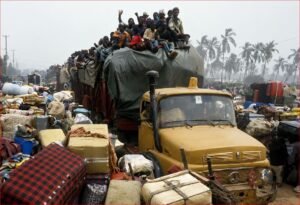

Ghana, 1969
One of Africa’s earliest large-scale immigration crackdowns occurred in 1969, when Ghana’s Prime Minister Kofi Abrefa Busia introduced the Aliens Compliance Order.
Hundreds of thousands of undocumented migrants, including Nigerians, Togolese, Burkinabés (then Upper Volta), Ivorians, and others, were instructed to leave the country.
The policy was justified on grounds of unemployment, economic pressure, and national security amid widespread public concerns that foreigners were competing with Ghanaians for jobs and commercial opportunities.
Nigeria, 1983 and 1985
History took a dramatic turn fourteen years later.
Following the collapse of the oil boom and severe economic recession, the Nigerian government under President Shehu Shagari ordered the expulsion of millions of undocumented migrants in 1983.
Among those affected were more than 1 million Ghanaians, as well as nationals from Benin, Niger, Chad, Cameroon, and several other West African countries.
The crisis popularised the now-famous phrase “Ghana Must Go,” referring to the woven bags many deportees used to carry their belongings.
A second wave of expulsions followed in 1985, demonstrating how quickly economic anxiety can transform into mass removals of fellow Africans.
Benin Republic: A Humanitarian Corridor
Although Benin Republic did not initiate these expulsions, it became one of the countries most directly affected.
Thousands of deportees traveling from Nigeria became stranded around Cotonou after border closures complicated onward movement.
The episode illustrated how migration crises in one African country can rapidly become regional humanitarian emergencies affecting neighboring states.
A Continental Pattern
Similar episodes have occurred at different moments across several African countries whenever economic conditions deteriorated, or political pressure intensified.
The pattern has often been strikingly similar.
Foreign nationals become convenient political targets, while deeper structural issues- including corruption, weak institutions, inadequate industrialization, poor governance, and limited job creation- remain unresolved.
South Africa’s current experience therefore resonates well beyond its borders.
It reflects a recurring cycle in African history in which fellow Africans become the easiest targets during periods of national hardship, despite evidence that migration alone rarely explains complex socio-economic challenges.
Can African Integration Succeed Without Trust?
The unfolding situation raises broader questions for the continent.
Can Africa successfully implement Agenda 2063 and fully realize the promise of the African Continental Free Trade Area (AfCFTA) if entrepreneurs, investors, professionals, traders, and skilled workers continue to fear discrimination within African borders?
Can the vision of a United Africa become reality if economic nationalism repeatedly overrides Pan-African solidarity whenever domestic pressures intensify?
Free trade is about far more than reducing tariffs.
It depends upon legal certainty, investor confidence, cross-border entrepreneurship, labor mobility, efficient logistics, and the assurance that Africans can live, work, invest, and innovate across the continent without fear.
If Africans increasingly view fellow Africans as competitors rather than partners, the dream of continental integration risks remaining more rhetorical than practical.
Three Possible Futures
South Africa now faces several possible trajectories.
The first is institutional recovery, in which the government strengthens border management, modernizes immigration systems, protects legal migrants, and addresses public concerns through transparent and constitutional governance.
The second is prolonged instability, marked by recurring demonstrations, economic disruptions, declining investor confidence, and weakening regional influence.
The third, and perhaps most concerning, is the normalization of vigilantism, in which non-state actors increasingly determine who belongs and who does not, gradually eroding constitutional authority and the rule of law.
No modern democracy can flourish where fear replaces legal institutions.
The Afribraz Perspective
For Afribraz Global Business Magazine, this debate extends beyond South Africa.
It speaks directly to the future of Africa’s economic integration, investment climate, and global competitiveness.
Brazil and Africa are building stronger commercial, diplomatic, and investment partnerships than at any time in recent decades. Investors, businesses, airlines, logistics companies, manufacturers, and development institutions increasingly view Africa as a continent of opportunity.
Yet opportunity depends on stability.
Continental integration requires not only infrastructure and trade agreements but also mutual trust, legal certainty, and respect for human dignity across borders.
History offers a powerful lesson.
From Ghana in 1969 to Nigeria in 1983 and 1985, and through other episodes across the continent, blaming fellow Africans for complex economic challenges has never produced lasting prosperity. Instead, it has too often weakened economies, strained diplomatic relations, and left enduring scars on African solidarity.
South Africa now stands at a defining moment.
The decisions taken in the months ahead will influence not only its democratic future but also Africa’s credibility as a continent committed to unity, shared prosperity, and inclusive economic growth.
Whether June 30 is remembered as the beginning of deeper division or the catalyst for renewed constitutional leadership will depend on how South Africa balances legitimate concerns over immigration with its enduring commitment to democracy, the rule of law, and the ideals upon which a united Africa seeks to build its future.
Afribraz Exclusive is the flagship analytical feature series of Afribraz Global Business Magazine, delivering in-depth journalism on African and Brazil-Africa business, diplomacy, trade, investment, and geopolitical affairs for global decision-makers.