

– By Afribraz Global Business Magazine | Energy, Trade & Geopolitics Feature
A Thin Line With Global Consequences
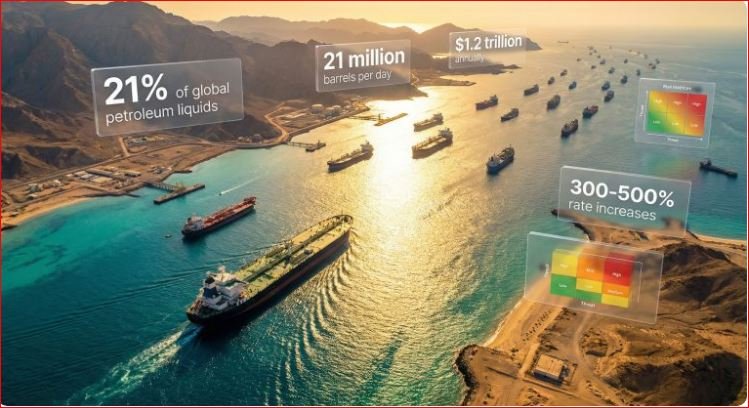
Tucked between the coastlines of Iran and Oman, the Strait of Hormuz is one of the most strategically important waterways on the planet. What appears as a narrow maritime passage is, in reality, a lifeline of the global economy.
This corridor connects the Persian Gulf—home to some of the world’s largest oil reserves—to the Gulf of Oman and the wider global ocean network.
At just 33 kilometers wide at its narrowest point, the strait carries nearly 20% of the world’s oil supply, making it indispensable to global energy security.
The Engine of Global Energy
Every day, millions of barrels of oil flow through the Strait of Hormuz from major producers such as Saudi Arabia, Iraq, Kuwait, and Qatar.
These exports power industries, transportation systems, and economies across:
- Asia
- Europe
- Africa
- The Americas
A disruption in this single route can trigger instant global economic shockwaves, from rising fuel prices to inflation in everyday goods.
A Chokepoint Under Constant Watch
In geopolitical terms, the Strait of Hormuz is a high-risk chokepoint—a narrow route that is both vital and vulnerable.
Its structure makes it:
- Easy to monitor
- Difficult to bypass
- Highly sensitive to conflict
As a result, global powers, including the United States, maintain a strong naval presence to ensure that shipping lanes remain open and secure.
A History Shaped by Conflict
The strategic importance of the Strait of Hormuz has made it a recurring flashpoint in global tensions.
During the Iran–Iraq War, the region witnessed attacks on oil tankers in what became known as the “Tanker War,” prompting international naval intervention.
In more recent decades, tensions involving Iran and Western nations have led to:
- Seizures of commercial vessels
- Military stand-offs
- Repeated threats to close the strait
These events underscore a critical truth: the stability of this narrow passage directly impacts the stability of the global economy.
What Happens When the Strait Is Disrupted?
Any disruption in the Strait of Hormuz quickly spreads beyond the region.
Immediate impacts include:
- Sharp increases in oil prices
- Rising transportation and logistics costs
- Volatility in global financial markets
Long-term consequences may include:
- Inflation across emerging and developed economies
- Supply chain instability
- Slower global growth
Special Report: What This Means for Africa and Brazil
For readers of Afribraz Global Business Magazine, the implications are both immediate and strategic.
Investing in renewable energy
Expanding refining capacity
Strengthening regional trade partnerships
Africa: Between Opportunity and Vulnerability
Oil-producing nations such as Nigeria and Angola may benefit in the short term from rising oil prices. Increased revenues can strengthen national budgets and foreign reserves.
However, the picture is more complex:
- Many African economies still depend on imported refined fuel
- Higher global prices can increase domestic inflation
- Transportation and food costs rise quickly
For non-oil-producing African nations, the impact is even more severe, as energy import bills surge.
Brazil: A Delicate Economic Balance
For Brazil, the situation presents both risk and opportunity.
Although Brazil is a major oil producer, its domestic fuel pricing is influenced by international markets. As a result:
- Fuel prices can rise domestically despite local production
- Inflationary pressure affects consumers and businesses
- Logistics and agricultural exports become more expensive
At the same time, higher oil prices can increase export revenues, strengthening Brazil’s position in global energy markets.
A Shared Strategic Lesson
For both Africa and Brazil, the Strait of Hormuz crisis highlights a critical need:
Energy diversification and strategic independence
This includes:
Can the World Bypass the Strait?
-
Final Analysis: A Global Pressure Point
The Strait of Hormuz is more than a geographic feature—it is a global pressure point where energy, politics, and economics intersect.For Africa and Brazil, understanding this critical route is not optional—it is essential for:
- Economic planning
- Energy security
- Geopolitical strategy
In an increasingly interconnected world, a disruption in one narrow waterway can reshape markets, policies, and livelihoods across continents.
Afribraz Insight
“The Strait of Hormuz reminds emerging economies that global dependence on narrow trade routes carries significant risk. The future belongs to nations that can anticipate these shocks and build resilient, diversified energy systems.”





Leave feedback about this