

By Global Affairs Magazine – Special Report, 2026
A War Reshaping the Middle East—and the World
The 2026 Iran war has rapidly evolved into one of the most dangerous geopolitical crises of the decade. What began as coordinated strikes by the United States and Israel has escalated into a multi-front conflict involving missile attacks, regional militias, and a severe disruption of global energy supply chains.
At the center of the crisis lies the Strait of Hormuz, a narrow maritime corridor through which nearly 20% of the world’s oil supply flows.
Iran’s effective blockade—or partial closure—has triggered what analysts describe as the largest oil supply disruption in modern history, sending prices soaring and shaking global markets.
Trump’s Position: Power, Pressure, and Contradictions
U.S. President Donald Trump has taken an aggressive yet at times inconsistent stance on the conflict.
On one hand, Trump claims overwhelming military success, stating that U.S. forces have “obliterated” Iran’s military capacity with thousands of strikes.
He has also pushed for an international naval coalition to secure the Strait of Hormuz, urging countries like Japan, France, and the UK to send warships.
Yet his messaging has raised global concern. In a controversial statement, Trump suggested that the U.S. might not even need to be involved in protecting the strait, citing America’s domestic oil independence.
This dual approach—military escalation combined with strategic ambiguity—has:
-
Confused allies
-
Reduced international support
-
Increased geopolitical uncertainty
Netanyahu’s Position: Total Pressure on Iran
Israeli Prime Minister Benjamin Netanyahu has maintained a far more consistent hardline approach.
Israel has intensified its military campaign, targeting Iranian leadership, infrastructure, and allied forces across the region.
Netanyahu’s strategic objective appears clear:
-
Weaken Iran’s military and regional influence
-
Prevent Iran from controlling key energy routes
-
Maintain pressure until Iran’s capabilities are significantly reduced
Israel has also backed strong responses to Iran’s threats over the Strait of Hormuz, aligning closely with U.S. military actions while pushing for continued strikes.
The Strait of Hormuz: The World’s Most Dangerous Chokepoint
The battle over the Strait of Hormuz is not just regional—it is global.
-
Oil prices surged from about $70 to over $110 per barrel within days
-
Shipping routes are disrupted, with insurers raising costs dramatically
-
Major economies face inflation risks and potential recession
Iran has signaled that it will restrict or control access, particularly for U.S. and allied vessels, while continuing attacks across the Gulf.
Is a Ceasefire Possible?
Despite growing global pressure, a ceasefire remains elusive.
-
Iran refuses direct negotiations with the U.S.
-
The U.S. and Israel continue military operations
-
Mediation efforts by countries like Oman and Egypt have so far failed
However, diplomatic ideas are emerging.
The European Union has proposed a “safe navigation agreement” for the Strait of Hormuz—similar to the Black Sea grain deal during the Ukraine war—aimed at reducing economic damage without ending the war entirely.
Still, without political compromise from Washington, Tehran, and Tel Aviv, a full ceasefire remains unlikely in the short term.
Brazil’s Position: Diplomacy, Neutrality, and Strategic Balance
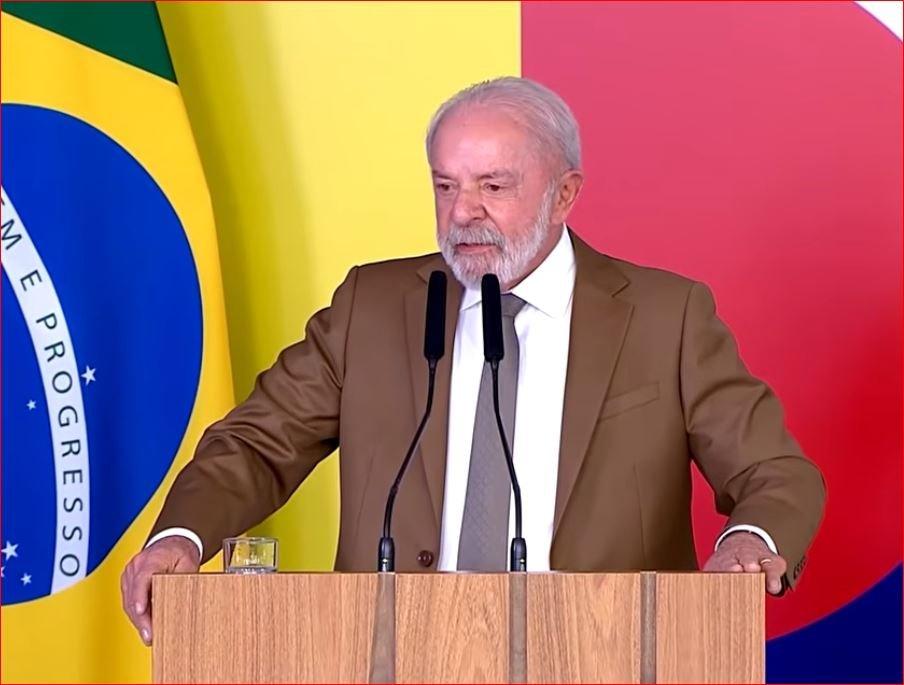

Brazil has not taken a direct military stance but is positioning itself as a voice for diplomacy and multilateral dialogue.
As a key member of BRICS and a leading Global South power, Brazil’s likely priorities include:
1. Defense of International Law and Peace
Brazil traditionally advocates:
-
Respect for sovereignty
-
Peaceful conflict resolution
-
Opposition to unilateral military escalation
2. Concern Over Economic Impact
Brazil is highly sensitive to:
-
Rising oil prices
-
Global inflation
-
Trade disruptions
The Strait of Hormuz crisis directly affects Brazil’s economy through fuel prices and supply chain costs.
3. Diplomatic Mediation Role
Brazil may seek to:
-
Align with BRICS partners like China and India
-
Support UN-led negotiations
-
Advocate for a ceasefire and de-escalation
Historically, Brazil has preferred neutral diplomacy over alignment with military blocs, making it a potential bridge between Western and non-Western powers.
Global Outlook: A Conflict Without Clear Exit
The Iran war is no longer a localized conflict—it is a systemic global crisis involving energy security, military alliances, and geopolitical power struggles.
Key risks ahead:
-
Expansion into a broader regional war
-
Long-term closure or instability in the Strait of Hormuz
-
Deepening divide between Western and Global South nations
-
Global economic slowdown or recession
Without a credible ceasefire framework, the world faces a prolonged period of instability—where diplomacy struggles to keep pace with escalation.
Final Word
The positions of Trump and Netanyahu reflect a strategy of pressure and dominance, while Brazil represents a contrasting voice calling for balance and negotiation.
The future of this conflict may ultimately depend on which path prevails:
-
Military escalation
-
or
-
Diplomatic compromise
At stake is not just the Middle East—but the stability of the global economy itself.