

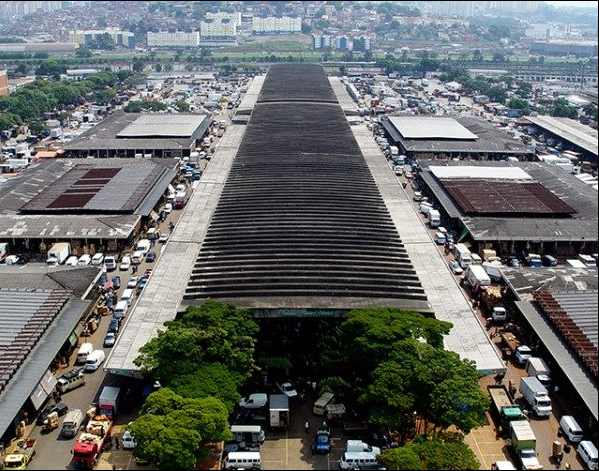
In the heart of São Paulo lies one of the most powerful yet underappreciated economic systems in Latin America: CEAGESP (Companhia de Entrepostos e Armazéns Gerais de São Paulo). More than just a wholesale market, it is a strategic backbone of Brazil’s food security, logistics, and agricultural economy.
A Giant Behind the Food System
CEAGESP is the largest food supply network in Latin America and one of the biggest in the world.
- Handles millions of tons of food annually, with over 3 million tons moving through its main terminal alone.
- Receives products from all Brazilian states and international suppliers.
- Serves more than 20 million people directly and indirectly.
- Facilitates over R$8 billion in annual transactions.
Every day, tens of thousands of people and thousands of trucks move through the complex, making it a living ecosystem of agriculture, commerce, and logistics. This system eliminates fragmentation and creates a structured marketplace where supply meets demand efficiently.
How the Agro Distribution System Works
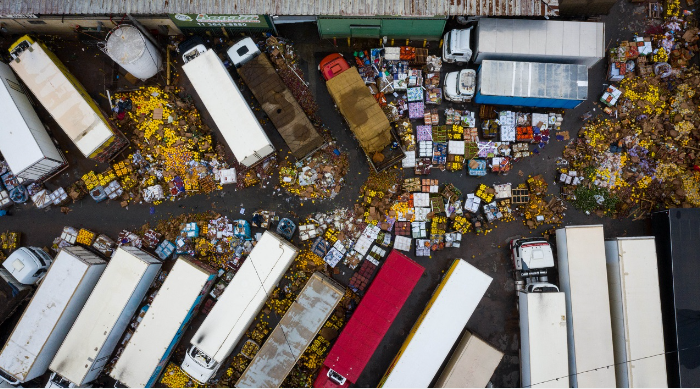
CEAGESP operates on a centralized wholesale distribution model:
- Farmers & Producers
Rural producers transport goods (fruits, vegetables, grains, fish, flowers) to the center. - Wholesale Market (Boxes/Stalls)
Traders rent spaces and sell in bulk to:- Supermarkets
- Restaurants
- Street markets
- Exporters
- Redistribution Network
Products are redistributed across Brazil—especially to the Southeast, South, and Midwest regions.
Efficiency Impact on São Paulo State
CEAGESP has transformed São Paulo into a logistical food hub:
- Reduces food shortages by ensuring constant supply flow
- Stabilizes prices through large-scale trading and competition
- Supports small farmers, giving them direct access to large buyers
- Minimizes post-harvest losses through storage, silos, and rapid distribution
Historically, Brazil faced major inefficiencies in food distribution before CEASA/CEAGESP systems were created in the late 1960s to fix expensive and disorganized supply chains.
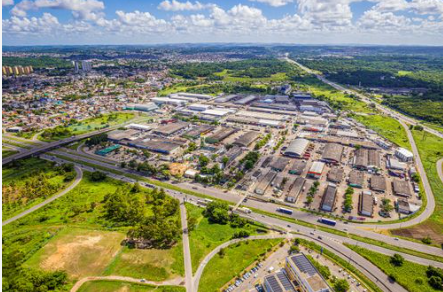
The Unseen Value of CEAGESP
Beyond visible trade, CEAGESP delivers hidden strategic value:
1. Food Security Infrastructure
It ensures that urban populations—especially mega-cities like São Paulo—have continuous access to fresh food.
2. Price Regulation Mechanism
Because of its scale, CEAGESP acts as an informal price benchmark for agricultural commodities across Brazil.
3. Employment Ecosystem
- Thousands of traders
- Transport operators
- Warehouse workers
- Informal labor networks
4. Data & Market Intelligence
Daily price formation and volume tracking provide critical insights for policymakers and agribusiness investors.
Impact on Brazilian Society
The influence of CEAGESP goes far beyond commerce:
- Feeds cities and towns across over 1,500 municipalities
- Supports family farming and rural livelihoods
- Strengthens national integration of agricultural markets
- Plays a role in inflation control, especially for food prices
It is not an exaggeration to say:
If CEAGESP stops, Brazil feels it immediately.
Should This Model Be Replicated in Other Brazilian States
The answer is yes, but with adaptation.
Brazil already has similar systems (CEASAs), but CEAGESP stands out because of:
- Scale
- Integration with logistics infrastructure
- Strategic location in an economic hub
Replication benefits:
- Reduced regional inequality
- Stronger local food systems
- Improved farmer income
However, success depends on:
- Efficient transport networks
- Strong governance
- Digital market systems
Africa: A Golden Opportunity for Adaptation
For Africa, CEAGESP offers a powerful blueprint.
Current Challenge in Africa
- Fragmented markets
- Poor storage systems
- High post-harvest losses
- Weak farmer-to-market linkages
What a CEAGESP-like System Could Do
- Reduce Food Waste
Africa loses up to 30–50% of produce post-harvest. A centralized system could drastically cut this. - Boost Farmer Income
Direct access to large buyers removes middlemen exploitation. - Strengthen Food Security
Urban centers would have more stable food supply chains. - Create Jobs
Logistics, warehousing, transport, and trade sectors would expand massively. - Enable Regional Trade
Such hubs could power the African Continental Free Trade Area (AfCFTA).
Strategic Vision: Afribraz Collaboration
There is a strong case for Brazil–Africa cooperation:
- Brazil exports agricultural expertise
- Africa provides expanding markets
- Joint ventures in logistics and agro-distribution
A CEAGESP-inspired model in cities like Lagos, Nairobi, Accra, or Addis Ababa could redefine Africa’s agricultural economy.
Conclusion: The Silent Powerhouse
CEAGESP is not just a market—it is a national strategic asset.
It represents:
- Organization over chaos
- Efficiency over waste
- Structure over fragmentation
For Brazil, it is a pillar of stability.
For Africa, it is a model waiting to be adapted.
Afribraz Insight:
The future of food security in emerging economies will not depend only on production, but on distribution. And CEAGESP proves that when distribution works, the entire economy benefits.





Leave feedback about this